
 English
 Spanish
 Arabic
 Chinese
 French
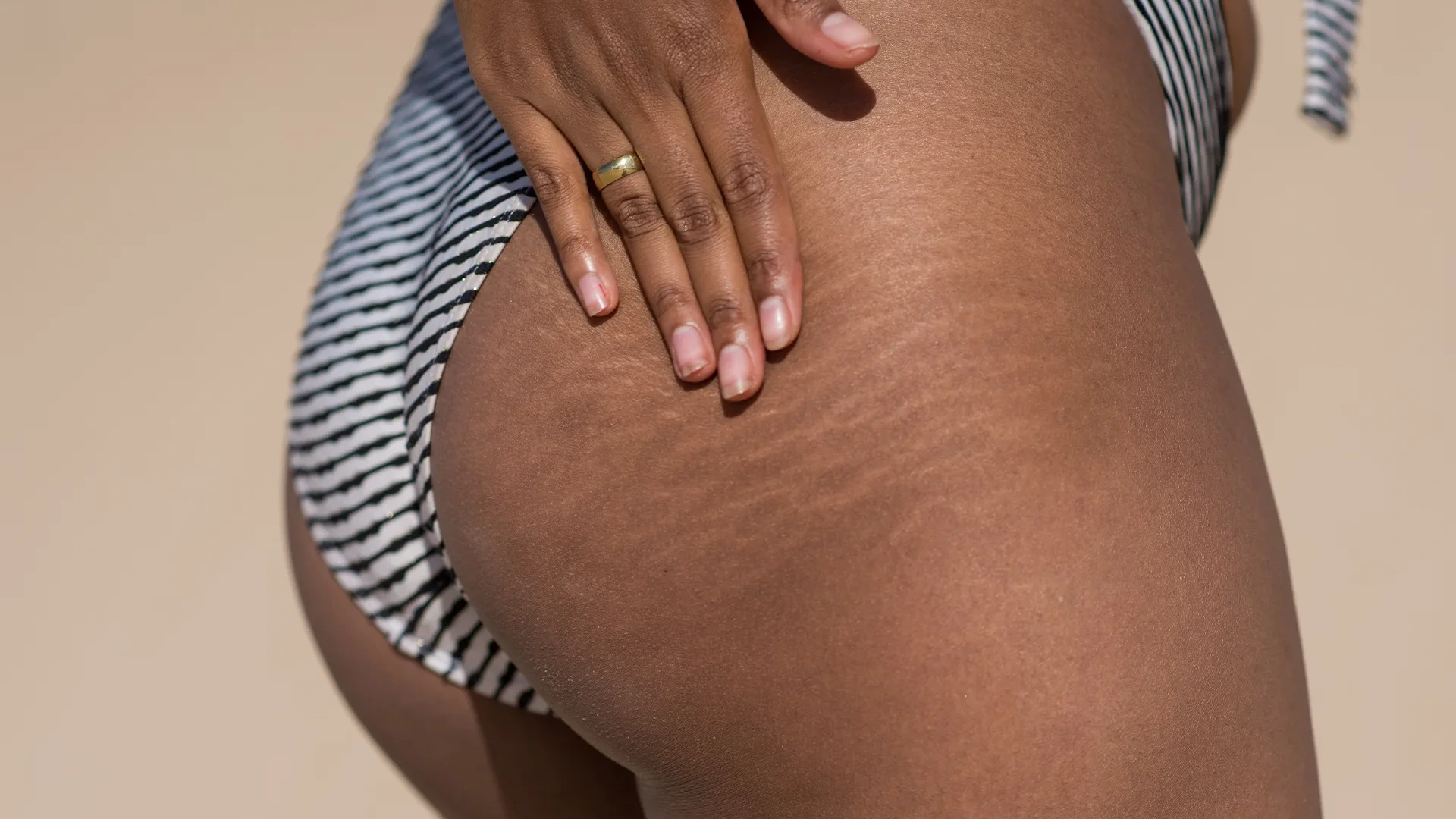
Cellulite is common, visible and surprisingly difficult to treat well. The dimpled surface seen most often on the buttocks and thighs is not simply a pocket of “stubborn fat”, and that is why promises to melt, dissolve or permanently remove cellulite are usually too simplistic.
The appearance is shaped by several structures at once: fibrous septa that tether the skin, the way subcutaneous fat pushes between those attachments, skin thickness and elasticity, and the architecture of the tissue itself. A treatment that improves skin firmness may therefore affect one part of the picture without changing the fibrous bands that create deeper depressions.
This distinction matters when comparing non-invasive devices, radiofrequency, acoustic-wave treatments, massage-based approaches and minimally invasive procedures. They do not all target the same structure, and they should not be presented as interchangeable versions of one treatment.
There is no single non-invasive treatment that can be promised to remove cellulite. Some technologies have evidence suggesting improvement in appearance for selected patients, but study quality, protocols and durability vary.
Contents
Cellulite is not simply “stubborn fat”
Cellulite is a change in skin topography, usually seen as dimpling, depressions or an uneven “orange-peel” surface. It is especially common after puberty and is reported far more frequently in women than in men because connective-tissue architecture differs between the sexes.
The older explanation that “fat pushes through connective tissue” captures only part of the biology. Current reviews describe a multifactorial process involving fibrous septa, fat lobules, skin structure, vascular and connective-tissue factors, genetics and hormonal influences. Body weight can influence how cellulite looks, but cellulite is not a distinct type of body fat.
This is clinically important because weight loss and cellulite treatment are not the same thing. A person can have a low body-fat percentage and still have visible dimpling, while reducing fat does not automatically release the fibrous bands that create characteristic depressions.
Cellulite, skin laxity and localised fat are different concerns
Three concerns are often grouped together in body-contouring conversations even though they need different treatment logic: cellulite, skin laxity and localised adiposity.
Cellulite refers primarily to surface dimpling and depressions. Skin laxity refers to looseness or reduced recoil of the skin. Localised fat refers to the amount or distribution of adipose tissue in a specific area. These can coexist, but one does not automatically explain the others.
| What is visible? | Likely dominant issue | Treatment logic |
|---|---|---|
| Discrete dimples or depressions | Fibrous septal tethering is often important. | Approaches that act only on surface skin may have limited effect on deep tethering. |
| Crepey or loose skin | Skin laxity / reduced elasticity. | Skin-remodelling or tightening approaches may be more relevant than cellulite-specific treatment. |
| Generalised fullness without dimpling | Localised adiposity may dominate. | Fat-reduction strategies should not be marketed as cellulite removal. |
| Mixed dimpling + laxity + volume | More than one tissue component contributes. | A multimodal plan may be discussed, but each element should have a clear purpose. |
What “non-invasive” actually means
“Non-invasive” should mean that treatment is delivered without cutting the skin, inserting a cannula beneath it or performing subcision. External radiofrequency, acoustic-wave therapy, massage or vacuum-based devices can fall into that category depending on the device and protocol.
Microneedling radiofrequency is different because needles enter the skin. Subcision is different again because a needle or other instrument is passed beneath the skin to release fibrous bands. Cannula-based thermal treatments are also minimally invasive rather than non-invasive.
This terminology is not cosmetic detail. It changes expected recovery, risks, consent and how a procedure should be described to patients.
What the evidence says about non-invasive cellulite treatments
The evidence base for cellulite treatment is mixed. A 2015 evidence-based review found major methodological weaknesses across many studies and identified stronger evidence mainly for acoustic-wave therapy and a minimally invasive 1440-nm laser. More recent reviews describe a broader range of potentially useful approaches, including radiofrequency, acoustic methods, subcision and selected injectables, but still emphasise heterogeneity and the need for better comparative trials.
A 2024 systematic review of randomised controlled trials evaluated 24 studies involving 2,084 participants across mechanical stimulation, topicals, shock-wave therapy, lasers, radiofrequency, injectables and ultrasound. The review confirms that multiple modalities have been studied, but it does not establish one universally superior, durable, non-invasive option.
Radiofrequency: where it may fit
Radiofrequency uses electrical energy to heat tissue. Depending on the device, depth and treatment parameters, this may influence collagen remodelling, skin firmness and the appearance of surface texture.
Reviews published in recent years include radiofrequency among the better-studied non-invasive approaches, although protocols differ and many studies are small. A 2023 clinical review described radiofrequency as one of the stronger non-invasive options in the peer-reviewed literature, while still classifying the overall evidence base as limited and heterogeneous.
The important distinction is that radiofrequency should not automatically be translated into “fat destruction” or permanent cellulite removal. A visible improvement in skin texture can occur without proving that fibrous septa have been released or that adipose tissue has been eliminated.
Acoustic and shock-wave approaches
Acoustic-wave and shock-wave therapies use externally delivered mechanical energy. They have been evaluated in several cellulite studies and are among the modalities that older systematic reviews identified as having some supportive evidence.
The proposed effects include changes in tissue mechanics, microcirculation and skin structure, but treatment parameters vary widely across devices. Course length, energy settings, treatment area and outcome scoring are not standardised enough to promise an identical result across clinics.
These treatments are non-invasive, but the term should not be confused with “proven to work for everyone”. Improvement, when seen, is usually measured as a change in appearance or cellulite severity rather than complete removal.
Vacuum, massage and mechanical stimulation
Vacuum therapy, massage and mechanical stimulation can temporarily alter tissue fluid, circulation and surface contour. Some devices combine suction with radiofrequency or other energy sources.
The challenge is separating short-term smoothing from a durable structural change. Manual massage may make tissue look temporarily less uneven, but evidence for lasting correction of cellulite architecture is limited. For that reason, claims that vacuum or massage “breaks down cellulite” should be treated cautiously.
When vacuum is part of a combined device, the evidence should be considered for that exact technology rather than assuming that every suction-based treatment produces the same biological effect.
Ultrasound, laser and combined energy-based devices
Ultrasound, laser and other energy-based technologies have all been investigated for cellulite. The literature includes both non-invasive and minimally invasive devices, which is another reason broad labels can be misleading.
Some laser and light studies report improvement, but systematic reviews have repeatedly noted small sample sizes, variable endpoints and short follow-up. The 2015 evidence-based review found that one of the stronger signals at that time came from a 1440-nm Nd:YAG laser — but that approach is minimally invasive, not a surface-only treatment.
A modern treatment comparison should therefore ask not only “what technology is used?” but also “does it enter the skin, what anatomical structure is being targeted, what evidence exists for this exact device and how long were patients followed?”
Why minimally invasive treatments belong in a different category
Some of the treatments with the clearest anatomical logic for discrete cellulite dimples are minimally invasive because they physically release fibrous septa. Subcision is the classic example.
That distinction matters because a patient searching for “non-invasive cellulite reduction” may reasonably expect no needle under the skin, no local anaesthetic and no subdermal tissue release. A treatment that uses these steps should be described as minimally invasive even if it avoids larger surgical incisions.
Minimally invasive options can have a different risk and recovery profile, including bruising, swelling, tenderness, infection, contour change and procedure-specific complications. They should therefore be compared with genuinely non-invasive treatments on more than convenience alone.
CelluTight™: important clarification about the current procedure
The current Dr Ducu Clinics bum-cellulite service page describes CelluTight™ as a targeted subcision procedure. A specialised needle is used beneath the skin to release fibrous bands, with local anaesthesia. Where clinically appropriate, the plan may also include poly-L-lactic acid, hyaluronic acid and Morpheus8.
That means CelluTight™ should not be described as a purely non-invasive radiofrequency-and-vacuum treatment. The present service information places it in a minimally invasive category, with an appointment time of approximately two hours and recovery that can include bruising, swelling or temporary marks.
Its rationale is also different from surface-only treatment: it aims to address the fibrous tethering that contributes to discrete dimples. The clinic’s current guidance says results vary by anatomy, skin quality and severity, and that changes can develop gradually as healing and collagen remodelling progress.
Where Morpheus8 may fit — and where the evidence is less direct
Morpheus8 combines microneedling with radiofrequency. Because microneedles penetrate the skin to deliver controlled energy, it is better described as minimally invasive rather than non-invasive.
The current clinic service page positions Morpheus8 primarily around skin laxity, wrinkles, acne scarring, uneven texture and skin remodelling. Its role in a cellulite plan is therefore more plausibly related to skin quality or laxity than to physically releasing deeper fibrous bands.
The broader cellulite literature includes radiofrequency among potentially useful modalities, but that should not be interpreted as proof that every RF-microneedling protocol has demonstrated durable cellulite reduction. Treatment-specific evidence still matters.
Abs Tight and Arms Tight are not the same as cellulite treatment
The current Dr Ducu Clinics pages describe Abs Tight and Arms Tight as minimally invasive SkinTight™ procedures designed primarily for skin laxity and contour rather than as non-invasive cellulite-removal treatments.
Abs Tight uses a cannula-based subdermal thermal technique under local anaesthesia for selected abdominal laxity. Arms Tight is likewise described as minimally invasive and may be used for upper-arm skin laxity and contour. Both can involve adjunctive treatments where clinically appropriate.
This is important because dimpling, laxity and localised fat can overlap visually. A patient with loose abdominal skin may benefit from a laxity-focused discussion, but that is not the same clinical question as treating classic cellulite depressions on the buttocks or thighs.
Why combining treatments is not automatically better
Combination treatment can make sense when more than one anatomical problem is present. A patient may have discrete tethered dimples, reduced skin firmness and a separate contour concern, each of which may respond to a different strategy.
But “more treatments” is not the same as “better treatment”. Every added procedure introduces cost, recovery and risk. The purpose of combining treatments should be explicit: one component for septal tethering, another for skin quality, another for localised volume — not simply stacking devices because they are available.
Recent reviews acknowledge that multimodal approaches are common in cellulite management, but also call for better comparative research. A combined protocol should therefore be individualised rather than presented as a universal route to optimal results.
What a careful consultation should assess
A good cellulite consultation begins by identifying the visible problem correctly. Are there isolated dimples, diffuse rippling, laxity, localised fat, post-liposuction fibrosis or a mixture of these? The treatment plan depends on the answer.
Medical history, previous liposuction or body-contouring procedures, scarring tendency, skin quality, pregnancy status, medicines, active infection and the patient’s expectations can all affect suitability. The clinician should also clarify whether the proposed procedure is genuinely non-invasive or minimally invasive.
Most importantly, the consultation should define what meaningful improvement would look like. Cellulite is common and difficult to eliminate completely. A realistic plan aims for proportionate improvement in a specific feature rather than a promise of permanently smooth skin.
| Consultation question | Why it matters |
|---|---|
| Is the main concern dimpling, laxity, fat or fibrosis? | Different tissue problems require different treatment logic. |
| Is the proposed treatment non-invasive or minimally invasive? | This affects consent, downtime, risks and expectations. |
| What exact evidence supports the proposed device or procedure? | Evidence for one technology should not be borrowed for another. |
| How will improvement be measured? | Standardised photos and validated severity scales are more useful than vague claims of “smoother skin”. |
| What happens if the result is modest? | Cellulite often needs expectation management rather than repeated automatic treatment. |
Frequently asked questions
Can cellulite be removed completely without surgery?
Is cellulite just fat?
Can losing weight get rid of cellulite?
What is the best non-invasive cellulite treatment?
Does radiofrequency remove cellulite?
Does shock-wave therapy work for cellulite?
Can massage or vacuum therapy permanently remove cellulite?
Is Morpheus8 non-invasive?
Can Morpheus8 treat cellulite?
Is CelluTight™ non-invasive?
What does subcision do for cellulite?
Are Abs Tight and Arms Tight cellulite treatments?
Is combining cellulite treatments always better?
How long do cellulite-treatment results last?
When should I consider a consultation?
A realistic way to think about cellulite treatment
The most useful question is not “Which machine removes cellulite?” but “What structure is creating the appearance in this particular area?” A shallow surface ripple, reduced skin elasticity and a deep tethered depression may all look like cellulite in a mirror, yet they are not the same treatment problem.
Genuinely non-invasive technologies can be reasonable to discuss when the goal is modest improvement in skin texture or firmness, provided the limitations of the evidence are understood. Where discrete fibrous tethering is dominant, minimally invasive options such as subcision belong in a different category and require a different consent conversation.
A credible treatment plan therefore starts with anatomy, not a device name. It separates dimpling from laxity and fat, distinguishes non-invasive from minimally invasive procedures, uses evidence proportionately and avoids promising complete or permanent cellulite removal.
Related treatment: Cellulite