
 English
 Spanish
 Arabic
 Chinese
 French
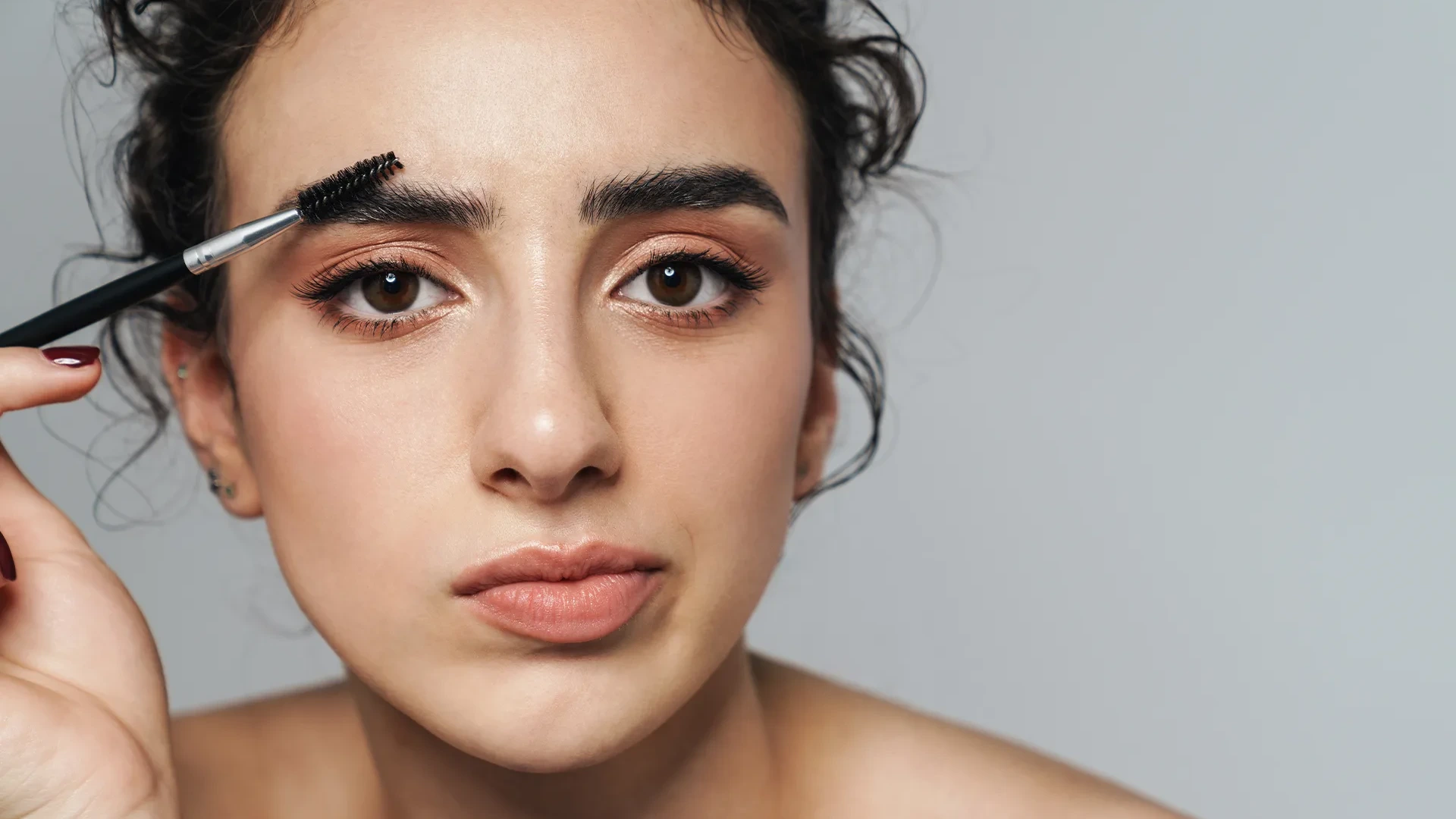
Fuller brows can be created in several very different ways: by styling the hair already present, adding pigment to the skin, treating an underlying cause of hair loss or, in selected patients, transplanting new follicles. The right option depends on why the brows look sparse in the first place.
That distinction is easy to miss. A pencil can make an eyebrow look denser immediately but cannot create new follicles. A cosmetic serum may improve conditioning without proving true regrowth. A transplant can add living hair follicles, but it is a surgical procedure with donor-site considerations, recovery and the possibility of uneven graft growth.
A useful guide to thicker eyebrows therefore needs to separate appearance from biology. The first question is not simply “What should I put on my brows?” but “Are the follicles still present, is there an active hair-loss process, and is the goal temporary definition or actual hair restoration?”
Sparse eyebrows are a visual description, not a diagnosis. Over-plucking, ageing, inflammatory skin disease, autoimmune hair loss, endocrine conditions, nutritional deficiency, scarring and medication-related shedding can all affect brow density. Sudden, patchy, scarring or otherwise unexplained eyebrow loss should be assessed before cosmetic treatment is chosen.
Contents
Thicker brows start with the cause, not the product
Eyebrow density can be reduced because fewer hairs are growing, because existing hairs are finer or shorter, because hair has been repeatedly removed, or because pigment and styling no longer create the same definition. These are not interchangeable problems.
If the follicles are healthy but the brow is visually light, tinting or make-up may create more definition. If hair has been lost because of an active dermatological or medical condition, treating the cause may be more important than adding a cosmetic procedure. If follicles are permanently absent or the goal is to add real hair to a stable sparse area, transplantation may enter the discussion.
This is why starting with diagnosis and anatomy is more useful than starting with a trending product.
Why eyebrows become sparse or thin
Acquired eyebrow loss is often called madarosis. Medical reviews describe a wide range of causes, including alopecia areata, inflammatory skin disorders, thyroid disease, infection, nutritional deficiency, trauma, repetitive plucking, medication-related hair loss and scarring conditions.
Some causes are reversible; others permanently damage follicles. The pattern can provide clues: smooth patches may suggest a different process from scaly inflamed skin, gradual age-related thinning or a scarred area after trauma or surgery.
Sudden loss, rapidly progressing loss, associated scalp or eyelash loss, visible inflammation, scarring, systemic symptoms or a new medication history are reasons to consider medical review rather than relying only on cosmetic products.
| Pattern | What it may suggest | Why assessment matters |
|---|---|---|
| Gradual thinning after years of plucking | Repeated mechanical trauma may have reduced follicle activity; some follicles may still recover while others may not. | Time and examination help distinguish temporary thinning from more established follicle loss. |
| Smooth, discrete patches | Autoimmune hair loss is one possible cause among several. | Cosmetic camouflage can hide the area, but the underlying diagnosis may need treatment. |
| Scaling, redness or itch | Inflammatory or infectious skin disease may be contributing. | Treating active skin disease comes before elective restoration. |
| Loss within a scar | Follicles may be permanently damaged. | Transplantation can sometimes be considered, but graft survival in scarred skin is less predictable. |
| Diffuse loss with other symptoms | Endocrine, nutritional, medication-related or systemic causes may need consideration. | A cosmetic-only approach can miss a treatable cause. |
What can regrow hair — and what only creates the appearance of density
There are three broad ways to make eyebrows look fuller: enhance existing hair, add pigment, or add living follicles. Each produces a different kind of result.
Make-up and tinting work with the brow that already exists. Microblading and micropigmentation place pigment in the skin to mimic or strengthen the look of hairs. Medical therapy, where appropriate, aims to influence follicle behaviour. Hair transplantation physically relocates follicles from a donor area into the eyebrow.
Using the word “growth” for all of these methods is misleading. A tinted brow may look thicker without one additional hair being present.
Natural oils: useful for conditioning, not proven brow regrowth
Castor oil, coconut oil and rosemary oil are frequently recommended online for eyebrow growth. They may condition the hair shaft or surrounding skin, and some oils have dermatological properties worth studying, but high-quality evidence that they reliably regrow sparse eyebrows is limited.
The current evidence does not justify claims that oils “wake up” dormant eyebrow follicles, restore follicles destroyed by scarring or guarantee regrowth after years of over-plucking. A 2026 review of castor oil described possible hair-related benefits but also concluded that further clinical investigation is needed to establish efficacy and optimal use.
Oils can also irritate the skin around the eyes or trigger contact dermatitis in susceptible people. If used for conditioning, they should be kept out of the eye and stopped if redness, swelling or itching develops.
Eyebrow serums and medical treatments
Cosmetic eyebrow serums vary widely. Peptides, panthenol and conditioning ingredients may improve the feel or appearance of existing hairs, but the presence of biotin, keratin or botanical extracts does not by itself prove clinically meaningful regrowth.
There is stronger trial evidence for some medicinal topical approaches in eyebrow hypotrichosis. Randomised studies have reported increased eyebrow density and diameter with certain prostaglandin-analogue and hair-growth treatments. These results should not be generalised to ordinary cosmetic serums.
In the UK, prescription-only medicines cannot be promoted to the general public. Their use around the eyebrow may also differ from the licensed indication of the medicine. Medical treatment should therefore be considered through an appropriate clinician rather than copied from online routines or used close to the eye without guidance.
Timelines are also product- and diagnosis-specific. A blanket promise that any serum will produce visible regrowth within four to eight weeks is not evidence-based.
A clinical trial on a medicinal active ingredient does not validate every over-the-counter brow serum with a similar marketing message. Product category, active ingredient, concentration, licensed indication, safety around the eye and the cause of eyebrow loss all matter.
Make-up, tinting and microblading: what each one actually changes
Make-up is the most flexible option because it changes appearance without attempting to alter hair biology. Pencils, powders, pomades and fibre gels can define shape, fill visible gaps and make existing hairs appear denser.
Tinting colours existing hairs and can make fine or pale hairs more visible. It does not create new follicles or fill a completely hairless gap in the same way pigment or transplantation can.
Microblading uses superficial pigment strokes to imitate hairs in the skin. It can change shape and the visual impression of density, but the result is pigment rather than hair growth. Fading, colour change and the need for maintenance vary by skin, pigment, technique and aftercare.
Microblading is cosmetic pigment, not new hair
Microblading is often described casually because it is common, but it is still a skin-penetrating cosmetic procedure. Published reports describe complications including infection, allergic or inflammatory reactions, granulomatous reactions, pigment change and, rarely, pathological scarring.
The main limitation for someone asking how to “grow eyebrows back” is conceptual: microblading can make a sparse area look fuller, but it does not restore the hair follicle. That can be perfectly acceptable when the goal is visual definition rather than biological regrowth.
Because pigment and transplanted hair interact visually, previous microblading should be discussed before eyebrow transplantation. Existing colour, shape and scar tissue can influence planning.
When an eyebrow transplant may be considered
An eyebrow transplant may be considered when a patient wants actual hair in areas where density is permanently reduced or naturally sparse and the underlying cause is sufficiently stable. It may also be considered after trauma or scarring in selected cases.
It is not automatically the right answer for active alopecia, untreated inflammatory disease, unstable scarring hair loss or a poorly understood cause of eyebrow loss. Donor-hair quality, facial proportions, existing eyebrow direction and realistic expectations all influence suitability.
The strongest reason to choose transplantation is not that it is the “most advanced” or “best” option. It is that it solves a different problem: it relocates living follicles rather than adding pigment or temporarily darkening existing hairs.
How FUE eyebrow transplantation works
The current Dr Ducu Clinics eyebrow-transplant service uses Follicular Unit Extraction (FUE). Individual follicular units are harvested from a donor area, typically the back of the scalp, and then implanted into planned recipient sites in the eyebrow.
FUE avoids a linear strip scar but does not mean “scar-free”. It produces multiple small extraction sites, and the visibility of small donor scars varies with healing, skin characteristics, haircut and the number of grafts harvested.
The current clinic information states that the procedure is performed under local anaesthesia, usually as a day case, and commonly takes around four to six hours depending on the number of grafts and design complexity.
Why angle, direction and single-hair placement matter
Eyebrow transplantation is technically demanding because brow hairs grow at changing angles and directions over a very small area. The inner brow, arch and tail do not all point the same way.
Published restoration literature emphasises recipient-site angle and direction as major determinants of a natural appearance. Poor placement can produce hairs that point away from the skin, cross neighbouring hairs or create an artificial density pattern.
This is also why single-hair follicular units are often preferred in visible parts of the brow. A technically successful graft that grows in the wrong direction can still be aesthetically unsatisfactory.
Recovery, shedding and the growth timeline
Early recovery typically includes redness, swelling, tenderness and scabbing. The current clinic guidance describes initial healing and scab removal over roughly seven to ten days, with some variation between patients.
Transplanted hairs commonly shed during the first few weeks. This can look alarming but does not necessarily mean the follicle has been lost. New growth may begin at around three to four months, while density continues to develop over subsequent months.
The current clinic information advises that final maturation may take around nine to twelve months or longer. Not every graft survives, so final density, symmetry and appearance cannot be guaranteed.
Because scalp follicles usually retain scalp-like growth characteristics, transplanted eyebrow hairs often need regular trimming and grooming.
Risks, limitations and maintenance after eyebrow transplant
Eyebrow transplantation is surgery and carries risks. These include pain, swelling, bruising, bleeding, infection, scarring, folliculitis, ingrown hairs, temporary shock loss of existing hair, cysts, altered sensation, poor or uneven graft growth, asymmetry, unnatural direction and donor-site thinning.
Some patients may need an additional procedure to improve density or symmetry. Even when grafts survive, the final aesthetic result depends on design, hair calibre, curl, direction and how the transplanted scalp hairs are groomed.
The goal is long-lasting hair growth from follicles that successfully establish, not a guarantee that every graft will survive for life or that both eyebrows will become perfectly symmetrical.
Eyebrow transplant vs microblading vs tinting
| Method | What it changes | Main limitation / maintenance |
|---|---|---|
| Make-up | Adds temporary colour and definition around existing hairs. | Washes off and does not change follicle number. |
| Tinting | Darkens existing eyebrow hairs so they appear more visible. | Cannot fill truly hairless areas; fades and requires repeat treatment. |
| Microblading / micropigmentation | Places pigment in the skin to mimic hair strokes or create definition. | No new hair growth; pigment fades and may change colour; skin complications are possible. |
| FUE eyebrow transplant | Transfers living hair follicles from a donor area into the eyebrow. | Surgical recovery, donor-site considerations, graft-survival variability and ongoing trimming are required. |
The best choice depends on the problem being solved. Someone with healthy but very pale brow hairs has a different need from someone with a scar that contains no functioning follicles.
Combining methods can also be reasonable in selected cases, but one method should not be used to compensate for a diagnosis that has not been established.
What a careful consultation should assess
A careful consultation should establish when the thinning began, whether it is stable, whether there has been over-plucking, trauma, previous microblading, surgery or scarring, and whether hair loss is present elsewhere.
The skin should be examined for inflammation or scarring. For transplantation, donor-hair calibre and curl, the amount of donor hair available, current brow direction and the proposed design all need assessment.
UK advertising guidance for hair transplantation specifically emphasises the need for a pre-consultation to assess potential contraindications and general suitability. Cosmetic-intervention marketing should not trivialise surgery, exaggerate efficacy or omit the commitment involved in recovery and follow-up.
In England, cosmetic procedures involving instruments inserted into the body by healthcare professionals fall within the CQC regulated activity of surgical procedures. Hair-transplant services are therefore part of a regulated surgical pathway rather than a beauty treatment.
Frequently asked questions
Can eyebrows grow back after over-plucking?
Does castor oil make eyebrows grow?
Does rosemary oil grow eyebrows?
Do eyebrow serums work?
How quickly can a brow serum work?
Can biotin make eyebrows thicker?
What is the difference between tinting and microblading?
Is microblading permanent?
Can microblading cause scarring?
Is an eyebrow transplant permanent?
Does an eyebrow transplant use scalp hair?
Will transplanted eyebrow hairs need trimming?
How long does eyebrow-transplant recovery take?
When does transplanted eyebrow hair start growing?
Can eyebrow transplant results look unnatural?
When should eyebrow thinning be medically assessed?
A realistic approach to fuller eyebrows
The most useful way to approach sparse brows is to decide whether the goal is visual definition, biological regrowth or follicle replacement. Make-up and tinting can enhance what is already there. Microblading creates pigment-based definition. Medical treatment may be appropriate when an underlying hair-loss process is present. Transplantation can add real follicles when the cause is stable and donor hair is suitable.
No one method is automatically “best”. The right choice depends on diagnosis, permanence, tolerance for maintenance and recovery, and whether the desired change can be achieved without overtreatment.
Most importantly, unexplained eyebrow loss should not be reduced to a beauty problem. Establishing why the hairs are missing is the step that makes every later decision — cosmetic or surgical — more rational.
Related treatment: Eyebrow transplant