
 English
 Spanish
 Arabic
 Chinese
 French
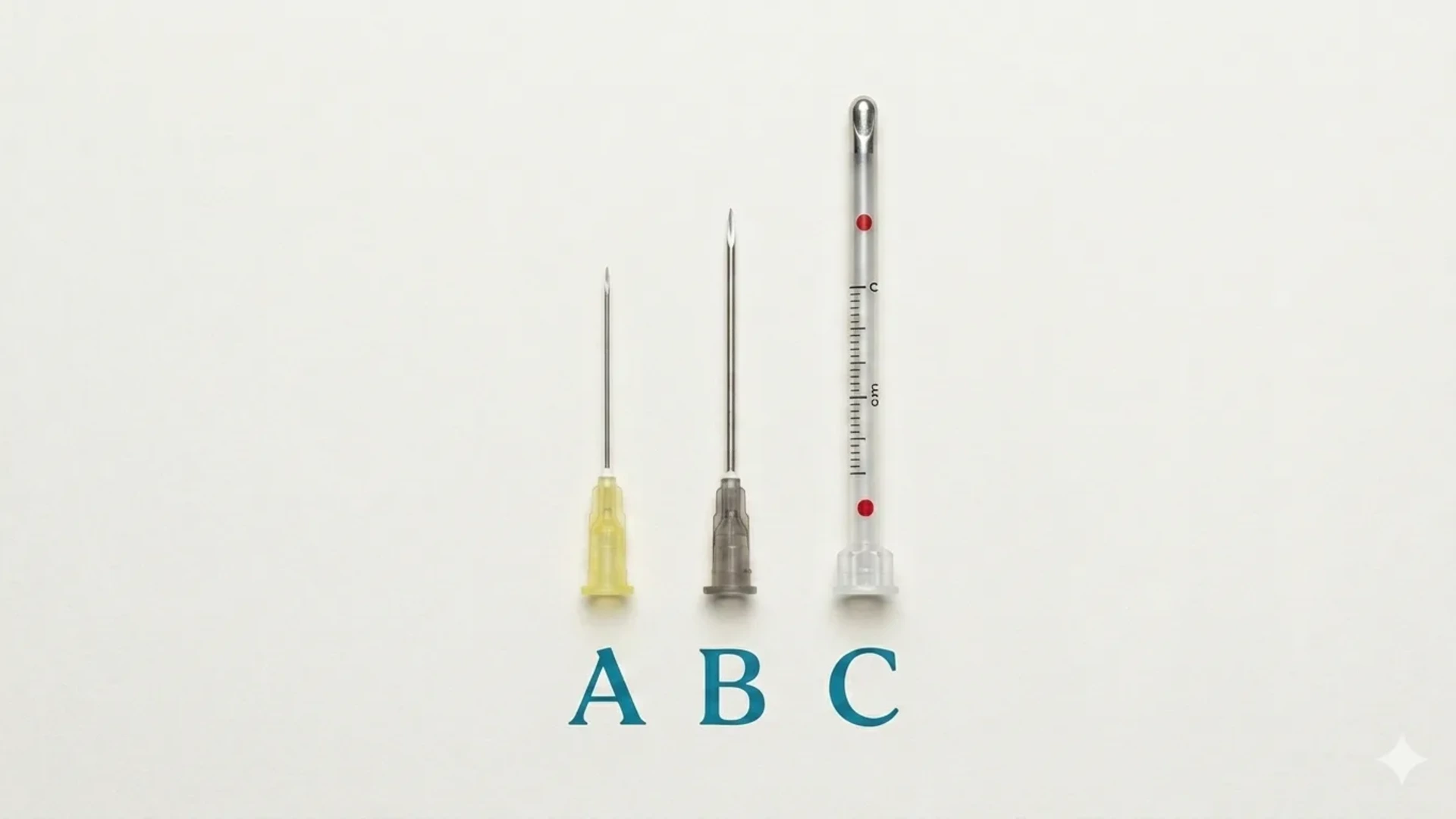
During an injectable or minimally invasive aesthetic procedure, patients sometimes notice that the clinician changes instruments as the treatment progresses. A fine needle may be used first, followed by a different needle, a blunt-tip cannula or, in selected procedures, a specialised cannula-based device. That is not duplication. Different instruments are designed to perform different jobs.
The choice is usually based on the treatment goal, the anatomy of the area, the depth or tissue plane being treated, the material being delivered and the amount of precision or tissue access required. A sharp needle can be useful for local anaesthetic, for creating a small access point or for precise focal placement. A blunt-tip cannula can allow broader movement through soft tissue from fewer entry sites. Neither instrument is automatically “better” for every patient or every area.
This matters because instrument choice is part of treatment planning rather than a marketing feature. Cannulas may be associated with less bruising and lower rates of vascular occlusion in some settings, but they do not eliminate vascular risk. Needles can offer precise placement but also require careful anatomical knowledge and technique. The safest and most appropriate choice depends on the clinical context.
Contents
01Why several instruments may be used
02Needles and cannulas: the practical difference
03Why a needle may be used first
04Local anaesthetic and access points
05What a blunt-tip cannula actually does
06Why a cannula is not automatically safer
07When a needle may be preferred
08Anatomy and tissue plane
09Different procedures need different tools
10Bruising, swelling and comfort
11What really improves injection safety
12What a patient should be told
13What the evidence says
14Frequently asked questions
Why several instruments may be used
Many aesthetic procedures are not a single mechanical action. A clinician may need to anaesthetise the skin, create a small access point, reach a particular tissue plane and then deliver filler, a regenerative preparation or controlled energy using the instrument designed for that stage. The sequence can therefore involve more than one tool even when the treatment itself is described under one procedure name.
Our patient information illustrates this with three instruments: a needle used to infiltrate local anaesthetic, a needle used to create the access point and a cannula used for product placement. The same principle applies more broadly: instrument choice follows function.
Needles and cannulas: the practical difference
A needle has a sharp tip designed to pierce tissue. A cannula used for filler placement is typically a flexible or semi-flexible tube with a blunt or rounded tip and a side opening near the end. That difference changes how the instrument enters and moves through tissue, but it does not create a simple “dangerous versus safe” distinction.
| Feature | Sharp needle | Blunt-tip cannula |
|---|---|---|
| Tip | Sharp; pierces tissue directly. | Rounded or blunt; usually introduced through a pre-made access point. |
| Typical strength | Precise, focal placement and direct access to a selected point. | Broader distribution through tissue from fewer access sites. |
| Movement | Enters along the line of the needle. | Can be advanced and redirected within a tissue plane. |
| Important limitation | Can penetrate vessels and other structures if technique or plane is inappropriate. | Can still enter or injure vessels; “blunt” does not mean risk-free. |
Why a needle may be used first
A cannula usually cannot be pushed through intact skin in the same way as a sharp needle. A small access point is therefore commonly created first. The opening is deliberately small: large enough for the selected cannula to pass through, but no larger than necessary for the procedure.
This explains why patients can see both a sharp needle and a blunt cannula during the same treatment. The needle is not a failed attempt to use the cannula; it performs the access step that allows the cannula to enter the intended soft-tissue plane.
Local anaesthetic and access points
Before an access point is created, local anaesthetic may be infiltrated into the skin or deeper tissues depending on the procedure. A fine needle allows controlled placement of anaesthetic into the selected area. The sensation from this stage can include a brief sharp feeling, pressure or stinging as the anaesthetic is introduced.
Anaesthetic use is part of comfort management, not a promise of a painless procedure. Some patients feel more pressure or movement than others, and some procedures involve sensations from tissue manipulation or energy delivery even after local anaesthesia has been used.
What a blunt-tip cannula actually does
Once the access point has been created, a blunt-tip cannula can be advanced through the soft tissues. Because the tip is rounded rather than sharp, it often dissects along existing tissue planes rather than cutting directly through them. This can make it useful for distributing product across a broader area from a smaller number of skin entry points.
That characteristic can also reduce bruising in some treatment areas and may reduce the chance of vascular occlusion compared with needle injection in some observational data. However, cannulas can still perforate vessels, particularly with inappropriate force, angle, depth or technique. The instrument should therefore never be described as “atraumatic” in an absolute sense.
Why a cannula is not automatically safer
It is tempting to turn instrument choice into a simple rule: cannula equals safe, needle equals risky. The evidence does not support that simplification. A large retrospective cohort of facial filler injections reported lower odds of vascular occlusion with cannulas than with needles, but occlusion events occurred with both instruments. More recent reviews reach a similar conclusion: cannulas may offer safety advantages in selected settings, but they are not inherently risk-free.
The safety profile also changes with anatomical region, gauge, injection pressure, product, depth, volume and clinician experience. A cannula used in the wrong tissue plane can be inappropriate; a needle used carefully for a precise structural point may be the better choice. Good practice is therefore based on anatomy and indication, not on instrument labels alone.
When a needle may be preferred
Sharp needles remain important because they can offer very precise placement. In selected facial filler techniques, a clinician may want to place a small amount of product at a defined point or depth rather than distribute it over a broad area. A needle can be useful for that type of focal placement.
Needles are also routinely used for local anaesthetic and for creating the access site for a cannula. The fact that a clinician uses a needle during a cannula-based treatment therefore does not mean the treatment plan has changed unexpectedly. It may simply reflect the different functions required during the procedure.
Anatomy and tissue plane
Instrument selection only makes sense in the context of anatomy. The same cannula can behave very differently in loose superficial tissue, dense fibrous tissue and a deeper plane over bone. Likewise, the same needle depth can be appropriate in one area and unsafe in another.
A clinician therefore considers the location of important vessels and nerves, tissue thickness, previous procedures, scar or fibrosis, the intended product and the treatment objective. Ultrasound may also be used in selected cases where previous filler, altered anatomy or a complication needs clarification. It is not automatically required for every injection, but it can add information when anatomy is uncertain.
Different procedures need different tools
At Dr Ducu Clinics, procedures such as DBL™, SkinTight™, CelluTight™ and regenerative treatments can involve different instruments because they are not all performing the same task. A filler cannula is used to deliver injectable material; a specialised cannula-based energy device used in a minimally invasive skin-tightening procedure has a different function and should not be confused with an ordinary filler cannula.
| Clinical task | Instrument that may be used | Why |
|---|---|---|
| Local anaesthetic infiltration | Fine sharp needle | Allows controlled placement into skin or selected tissues. |
| Cannula entry | Access-point needle | Creates a small skin opening for the blunt instrument. |
| Broader filler placement | Blunt-tip cannula in selected cases | Can distribute product through a tissue plane from fewer access sites. |
| Precise focal injection | Needle in selected cases | Supports accurate placement at a defined point or depth. |
| Subdermal energy delivery | Dedicated cannula-based device | Designed to deliver controlled energy in selected tissue planes rather than filler. |
Bruising, swelling and comfort
Cannulas are often described as causing less bruising, and there is evidence supporting that in some anatomical regions. However, the difference is not universal. A 2023 meta-analysis of infraorbital hyaluronic-acid studies found more bruising with needles but more oedema with cannulas. A prospective tear-trough study also found the cannula slightly less traumatic for bruising, while needle placement was more precise in that study.
Comfort is similarly individual. Fewer skin entry points can make a cannula technique feel easier for some patients, while tissue movement and pressure from a cannula can still be noticeable. Needle injections may feel sharper but can be brief and highly localised. It is more accurate to discuss likely sensations and recovery than to promise one instrument will be painless or bruise-free.
What really improves injection safety
Instrument choice is only one part of injection safety. Anatomical knowledge, patient assessment, product familiarity, appropriate plane selection, conservative pressure and volume, sterile technique and the ability to recognise and manage complications are equally important.
| Safety factor | Why it matters | What it does not mean |
|---|---|---|
| Anatomical assessment | Helps select appropriate entry points, depth and technique. | It cannot make vascular complications impossible. |
| Appropriate instrument | Matches precision, spread and tissue access to the treatment goal. | Cannula does not equal “zero vascular risk”. |
| Technique and pressure | Slow, controlled placement can reduce avoidable trauma and support precision. | A technically possible injection is not automatically clinically appropriate. |
| Complication preparedness | Early recognition and appropriate management matter when adverse events occur. | No cosmetic injection can be described responsibly as risk-free. |
What a patient should be told
A useful consultation should explain more than the name of the instrument. Patients should understand what is being treated, why a particular route is being considered, what other approaches are possible, the likely sensations, the expected short-term recovery and the relevant risks.
For cosmetic procedures in the UK, marketing and patient information should also avoid trivialising treatment or presenting risk reduction as risk elimination. Claims such as “completely safe”, “no risk”, “painless” or “no bruising” would be inappropriate unless they could be robustly substantiated — and for injectable cosmetic procedures, they generally cannot.
What the evidence says
Research comparing needles and cannulas is useful, but it should not be overgeneralised. A large 2021 retrospective cohort involving facial filler injections found vascular occlusion to be uncommon with both instruments and less frequently reported with cannulas. The study also found that practitioner experience was associated with lower occlusion risk. Because the study was observational and focused on facial filler practice, it does not prove that cannulas are safer in every area or every procedure.
A 2025 narrative review similarly concluded that cannulas tend to be associated with less bruising and a lower signal for vascular occlusion in some vessel-dense regions, while emphasising that cannulas can still penetrate vessels and cause ischaemic complications. It also noted that needles retain advantages for precise focal placement. A 2023 meta-analysis of infraorbital injections found different adverse-event profiles rather than one universally superior instrument.
Taken together, the evidence supports an individualised approach: anatomy, area, indication, product, desired placement and clinician skill should determine whether a needle, cannula or combination is appropriate.
Frequently asked questions
Why do you use a needle before a cannula?
A blunt-tip cannula usually needs a small skin access point. A sharp needle may therefore be used first to create that opening. A separate fine needle may also be used to infiltrate local anaesthetic.
Is a cannula safer than a needle?
Not in an absolute sense. Some studies report lower vascular-occlusion rates and less bruising with cannulas in selected filler settings, but cannulas can still injure or enter vessels. The appropriate instrument depends on anatomy, area, technique and treatment goal.
Can a cannula still cause a vascular occlusion?
Yes. A blunt tip reduces some forms of tissue penetration but does not eliminate the possibility of vascular injury or intravascular placement. Vascular complications remain possible with both needles and cannulas.
Why would a clinician choose a needle instead of a cannula?
A needle can be useful when precise focal placement is required, when local anaesthetic is being administered or when an access point needs to be created. In some anatomical areas and techniques it may be the preferred instrument.
Does a cannula cause less bruising?
It may in some treatment areas, and several studies have reported less bruising with cannulas. However, this is not guaranteed. Bruising depends on anatomy, technique, product, treatment area and the individual patient.
Does a cannula mean fewer injection points?
Often, yes. A cannula can sometimes reach a broader treatment area from one access site, whereas a needle technique may use several separate punctures. The number of access points still depends on the plan.
Are cannulas painless?
No. They may reduce the number of skin punctures, but patients can still feel pressure, movement or discomfort as the cannula passes through tissue. Local anaesthetic may be used depending on the procedure.
What does ‘blunt-tip’ mean?
It means the end of the cannula is rounded rather than sharpened like a needle. Filler cannulas typically have an opening near the side of the tip through which product is delivered.
Why does the cannula need a sharp needle entry point?
Because the rounded cannula tip is not designed to pierce intact skin efficiently. A controlled opening allows the cannula to pass into the intended tissue plane.
Are all cannulas the same?
No. Cannulas vary in length, diameter, flexibility, tip design and intended use. A filler cannula is also different from a dedicated cannula-based energy device used in some minimally invasive procedures.
Does instrument size matter?
Yes. Gauge and length affect stiffness, tissue access, product flow and the area that can be reached. The choice should be matched to the procedure and anatomy rather than selected by a universal rule.
Do you always use a cannula for filler?
No. Filler may be placed with a needle, a cannula or both, depending on the anatomical area, desired precision, treatment plane, product and clinician assessment.
Why can two patients receive the same treatment with different instruments?
Because their anatomy, tissue thickness, previous procedures, target area and treatment goals may differ. Instrument choice is part of an individual treatment plan.
Can ultrasound change which instrument is used?
It can in selected cases. Ultrasound may help identify tissue planes, vessels or previously injected material when the anatomy is unclear. It is not automatically required for every treatment.
What should make me seek review after an injectable treatment?
Worsening pain, increasing redness or heat, discharge, fever, marked swelling, unusual skin colour change, severe pain or eye and vision symptoms need prompt clinical assessment. Severe or rapidly evolving symptoms require urgent medical review.
Is instrument choice the most important safety factor?
It is important, but it is only one part of safety. Patient selection, anatomical knowledge, product familiarity, treatment plane, injection technique, sterile practice and the ability to recognise and manage complications are also essential.
Seeing several instruments during one treatment is usually a sign that different stages require different functions. A sharp needle can provide anaesthesia, create access or deliver precise focal placement. A blunt-tip cannula can allow broader product distribution through selected tissues. A dedicated cannula-based device may perform a completely different task. The correct choice is the one that fits the anatomy, the treatment objective and the procedure — not the one that sounds safest in isolation.
References / Further Reading
Alam M, et al. Rates of Vascular Occlusion Associated With Using Needles vs Cannulas for Filler Injection. JAMA Dermatology. 2021;157(2):174–180.
Spada J, et al. Needle versus Cannula to Treat Tear Trough: A Prospective Study Comparing both Methods. Plastic and Reconstructive Surgery Global Open. 2023.
Safety of infraorbital hyaluronic acid injections: Outcomes of a meta-analysis on prospective clinical trials. Journal of Cosmetic Dermatology. 2023.
Cannula is safer than needle in filler injection? Narrative review. 2025.
ASA / CAP. Guidance on the marketing of surgical and non-surgical cosmetic procedures.
Department of Health and Social Care. Licensing of non-surgical cosmetic procedures in England. Consultation and consultation response.
Related treatment: Dermal fillers