
 English
 Spanish
 Arabic
 Chinese
 French
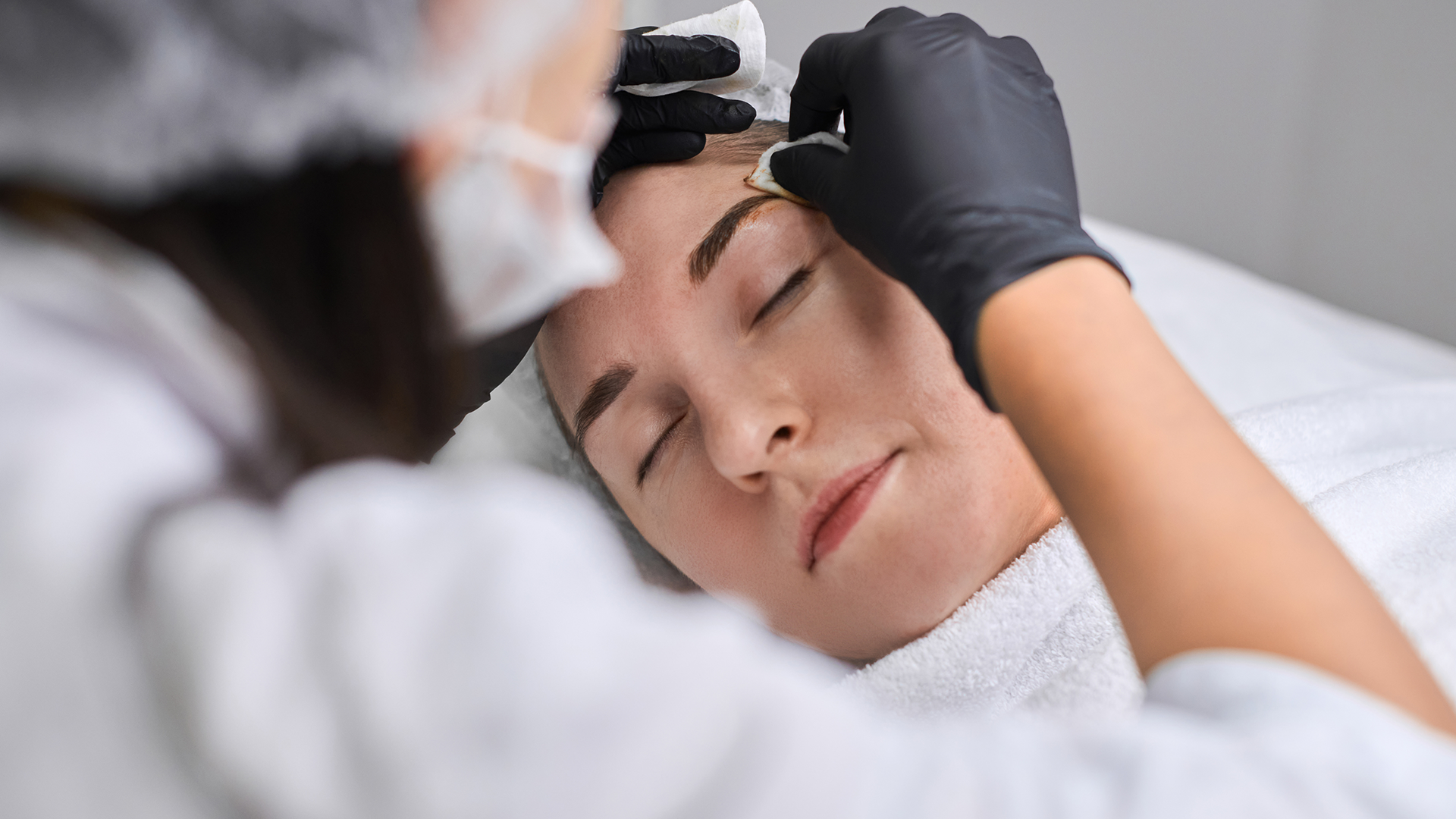
Eyebrow restoration · FUE suitability guide
An eyebrow transplant may be considered for selected adults with naturally sparse brows or stable eyebrow hair loss when the cause has been assessed, the recipient skin is healthy enough to support grafts, suitable donor follicles are available and the person accepts the limits and maintenance of scalp-derived hair. Sparse brows alone do not establish suitability.
The essential idea
The recipient area must be ready for transplantation, and the donor hair must be acceptable after it grows. FUE moves follicles; it does not treat active autoimmune, inflammatory, infectious or scarring disease. Scalp follicles also keep important donor characteristics, so a technically successful graft can still be a poor eyebrow match if its calibre, curl or growth behaviour is unsuitable.
The three questions that determine suitability
Dr Ducu Clinics uses follicular unit extraction for eyebrow transplantation. Individual follicles are taken from a donor area—commonly the scalp near the back or side of the head—and placed into planned eyebrow recipient sites. The procedure is surgical, normally performed as a day case under local anaesthetic.
Question 01
Why are the hairs absent?
The cause determines whether follicles might regrow, whether disease is active and whether transplanted follicles may also be affected.
Question 02
Can the skin support grafts?
Inflammation, infection, scarring, vascularity and tissue thickness affect placement, healing and survival.
Question 03
Will the donor hair behave acceptably?
Calibre, curl, colour, growth direction and growth cycle influence whether transplanted hair can resemble an eyebrow.
Only after these questions are answered should shape, graft number and density be finalised. Beginning with an outline copied from a photograph can overlook the medical reason for loss and the biological limits of transplantation.
Why the cause of eyebrow loss matters
The medical term for partial or complete loss of eyebrow or eyelash hair is madarosis. Clinical reviews describe a wide range of causes, including genetic sparseness, repeated trauma or over-plucking, ageing, inflammatory skin disease, autoimmune alopecia, infection, endocrine or nutritional disorders, medicines, burns, surgery and other scarring processes.
| Presentation | Question to resolve | Possible implication |
|---|---|---|
| Naturally sparse and unchanged brows | Is there any evidence of active disease or continuing loss? | Transplantation may be considered if donor hair, skin and expectations are suitable. |
| History of over-plucking or traction | Has the damaging practice stopped, and is regrowth still possible? | Observation or treatment of irritation may precede surgery. |
| Sudden or patchy loss | Could this be alopecia areata, infection, inflammatory disease or another active process? | Diagnosis and medical management take priority over grafting. |
| Loss with scale, redness, itch or pain | Is recipient skin inflamed or infected? | Surgery is generally deferred until the cause is controlled and suitability reassessed. |
| Scar after injury, burn or surgery | Is the scar mature, stable and sufficiently vascular? | Grafting may be possible, but survival and density can be less predictable. |
Eyebrow loss can occasionally be a sign of a local or systemic condition rather than an isolated cosmetic issue. A transplant must not be used to conceal a changing sign before appropriate assessment. Blood tests, dermoscopy, biopsy or referral are not required for everyone; they are selected when history and examination indicate a need.
Some non-scarring causes can improve when the underlying problem is treated. If native follicles may recover, permanent redistribution of scalp follicles may be premature.
When eyebrow loss may be considered stable
Stability means more than the absence of obvious shedding today. The cause should be understood, damaging behaviour should have stopped, inflammatory or infectious activity should be controlled, and the distribution should not be changing in a way that threatens native or transplanted follicles.
History
No continuing trigger
Plucking, traction, irritants or scratching that caused repeated injury should no longer be active.
Pattern
No unexplained progression
Comparable photographs and examination should not suggest active extension or new patches.
Skin
No active inflammation
Persistent redness, scale, itch, pustules, pain or loss of follicular openings calls for investigation.
Disease
Controlled where relevant
A clinician familiar with the condition may need to confirm quiescence before reconstructive surgery is considered.
There is no universal waiting period that proves every cause is inactive. Scarring alopecias are particularly important because apparently quiet disease can recur and damage grafts. Stability must be judged in the context of the diagnosis, not declared from a generic calendar rule.
Recipient skin health and scar quality
The brow skin must accept hundreds of precisely angled recipient sites while protecting the eye and surrounding structures. Healthy-looking skin is not assessed by colour alone; texture, thickness, mobility, inflammation, sensation, vascularity and previous procedures matter.
| Finding | Clinical relevance | Possible response |
|---|---|---|
| Active dermatitis or infection | Can impair healing and increase irritation or infection risk. | Diagnose and control the condition before reconsidering surgery. |
| Mature stable scar | Blood supply and fibrosis can make survival and density less predictable. | Use conservative planning; staged treatment or a test approach may be discussed. |
| Recent trauma, surgery or cosmetic tattooing | The tissue and final outline may still be changing. | Allow appropriate healing and obtain procedural details. |
| History of poor or raised scars | May influence donor and recipient scarring risk. | Discuss individual risk and whether elective surgery is appropriate. |
| Unexplained loss of sensation or pain | Can indicate previous nerve or tissue injury that requires clarification. | Investigate before creating recipient sites. |
Microblading or cosmetic tattoo pigment does not automatically exclude transplantation, but colour, previous scarring and the intended outline must be assessed. A pigment shape that is unsuitable cannot be corrected simply by planting hair over every part of it.
What makes donor hair suitable for an eyebrow
Eyebrow transplantation needs a relatively small number of grafts compared with scalp restoration, but donor selection is unusually visible. A thick, wiry or strongly curling scalp hair can be a poor match even when donor density is excellent.
| Characteristic | Desired relationship | If poorly matched |
|---|---|---|
| Calibre | Fine or appropriately delicate hairs are often preferred for a soft brow transition. | Coarse shafts may look heavy or artificial. |
| Curl | The curve should be compatible with the intended lie against the skin. | Strong curl can lift or turn hairs away from the planned direction. |
| Colour | Donor colour should work with native brow hair, skin and grooming preferences. | Contrast may reveal sparse zones or mixed texture. |
| Follicular-unit composition | Single-hair units are commonly required for fine, controlled placement. | Multi-hair groupings can create an unwanted tufted appearance. |
| Growth behaviour | The person accepts that scalp-derived hairs usually grow longer and need grooming. | Failure to trim can produce an untidy or non-eyebrow appearance. |
The clinic states that the donor area is commonly selected where follicles most closely match the calibre and characteristics needed for the brow, often near the side of the head or behind the ear. The best site varies by patient.
The donor scalp itself must also be healthy and sufficiently dense. FUE avoids a linear strip scar but creates multiple small extraction wounds. Donor-site thinning, small scars and altered sensation remain possible.
Expectations, grooming and design limits
A suitable candidate understands that transplanted eyebrow hair is living donor hair, not a fixed pigment stroke. Its final appearance depends on graft survival, angle, direction, curl, calibre, healing and daily grooming.
Accepts
Regular trimming
Scalp-derived hairs commonly retain longer growth and may require lifelong trimming and positioning.
Understands
Gradual growth
Visible shafts often shed first; growth and maturation take months and can be uneven.
Allows
Natural asymmetry
Mapping guides the design, but faces, healing and follicle growth are not perfectly symmetrical.
Recognises
Possible revision
Uneven growth, low density or unsuitable direction may lead to discussion of further treatment after maturation.
A dense block of hair is not the same as a natural eyebrow. The head, body, arch and tail use changing directions and angles. Skin thickness and pre-existing follicles can limit how flat a graft can be placed.
Surgery cannot guarantee an exact digital design, perfect bilateral symmetry or a fixed cosmetic look without maintenance. Nor should it be promised as a route to confidence, relationships or social acceptance.
Suitable, defer or choose another pathway?
The outcome of a consultation may be treatment, further assessment, observation or a decision that transplantation is not appropriate. Each can be clinically valid.
May be suitable
Stable recipient area
Cause understood, skin healthy or scar mature, compatible donor hair available and expectations realistic.
Defer and assess
Cause or activity unclear
Sudden loss, active symptoms, recent trauma, uncertain scar stability or potential regrowth needs clarification.
Another option
Goal is colour or outline
Cosmetic styling or pigment techniques may address a visual outline without moving follicles, but have separate risks and maintenance.
May be unsuitable
Risk exceeds benefit
Active disease, unsafe health status, poor donor match or expectations beyond surgical limits may justify declining treatment.
Pregnancy or breastfeeding, an active infection, unstable medical condition, inability to follow aftercare or inability to give informed consent may also require deferral. This is not a complete contraindication list; the individual medical assessment takes priority.
What an eyebrow-transplant consultation should establish
GMC guidance for cosmetic interventions emphasises a clear discussion of expected outcomes, benefits, material risks and alternatives, consent by the treating doctor and time to reflect. An eyebrow assessment should add cause-specific and donor-specific detail.
Assessment 01
Loss diagnosis
History, distribution, skin signs, stability, previous treatment and possible systemic context are reviewed.
Assessment 02
Recipient skin
Inflammation, infection, scarring, vascularity, pigment, sensation and existing follicles are examined.
Assessment 03
Donor match
Calibre, curl, colour, density, single-hair availability and expected grooming are discussed.
Assessment 04
Design feasibility
The planned outline is tested against native direction, skin, graft supply, facial movement and natural asymmetry.
Questions worth asking include:
- What is the likely cause of my eyebrow thinning, and is it stable?
- Do any skin findings require dermatology review before surgery?
- Which donor area best matches my eyebrow hair, and why?
- How might the donor hair’s curl and growth length affect the final brow?
- How will angles change from the inner brow through the arch and tail?
- What result is realistic if the recipient area is scarred?
- What support is available if infection, poor growth or an unsuitable direction develops?
Risks linked to candidate selection
The official clinic page lists pain, swelling, bruising, bleeding, infection, scarring, folliculitis, ingrown hairs, temporary loss of existing hair, poor or uneven graft growth, graft loss, cysts, altered sensation, asymmetry, unnatural angle or direction, donor-site thinning, further procedures and dissatisfaction as possible complications.
Poor selection adds another layer of risk: active disease can continue to destroy follicles, an inflamed surface may heal poorly, an unsuitable scar may support fewer grafts, and mismatched donor hair can remain visibly coarse or curl away from the skin. These problems cannot be solved by adding more grafts without understanding their cause.
Contact the treating team promptly for unexpected deterioration
Increasing or severe pain, rapidly worsening swelling around the brow or eye, persistent bleeding, pus, fever, spreading redness, skin darkening or breakdown, visual symptoms, inability to open the eye normally or another sudden concerning change requires prompt assessment. Severe eye symptoms, breathing difficulty, collapse or acute illness require urgent or emergency NHS care.
A sound indication reduces avoidable risk but does not guarantee graft survival, density, symmetry or satisfaction. The decision must remain voluntary and should not be rushed by promotions, social pressure or a short booking deadline.
Frequently asked questions
Are naturally sparse eyebrows suitable for transplantation?
Can over-plucked eyebrows be transplanted?
Is sudden eyebrow loss an indication for a transplant?
Can alopecia areata in the eyebrows be transplanted?
Can frontal fibrosing alopecia cause eyebrow loss?
Can eyebrow scars receive grafts?
Does eczema around the eyebrows prevent transplantation?
Does microblading prevent an eyebrow transplant?
Why is fine donor hair often preferred?
Can very curly donor hair be used?
Do I need enough donor hair for hundreds of grafts?
Can body hair be used when scalp hair is unsuitable?
Can transplantation make both brows perfectly identical?
What health information matters at consultation?
What may make someone unsuitable at present?
Individual assessment
Establish the cause, skin condition and donor match before designing the brow
A consultation can assess whether eyebrow loss is stable, whether the recipient skin can support grafts and whether available donor hair is compatible with the intended shape and long-term grooming.
Medical and regulatory sources
- Dr Ducu Clinics: FUE Eyebrow Transplant in London
- Eyebrow and Eyelash Alopecia: A Clinical Review
- Acquired causes of eyebrow and eyelash loss: a review and approach to diagnosis and treatment
- Eyebrow Madarosis: Updated Review, Part I—Nonscarring Disorders
- Eyebrow Madarosis: Updated Review, Part II—Scarring Disorders
- Eyebrow and Eyelash Hair Transplantation: A Systematic Review
- NHS: Choosing who will do your cosmetic procedure
- GMC: Guidance for doctors who offer cosmetic interventions
- ASA/CAP: Guidance on marketing cosmetic interventions