
 English
 Spanish
 Arabic
 Chinese
 French
Hair restoration · FUE suitability guide
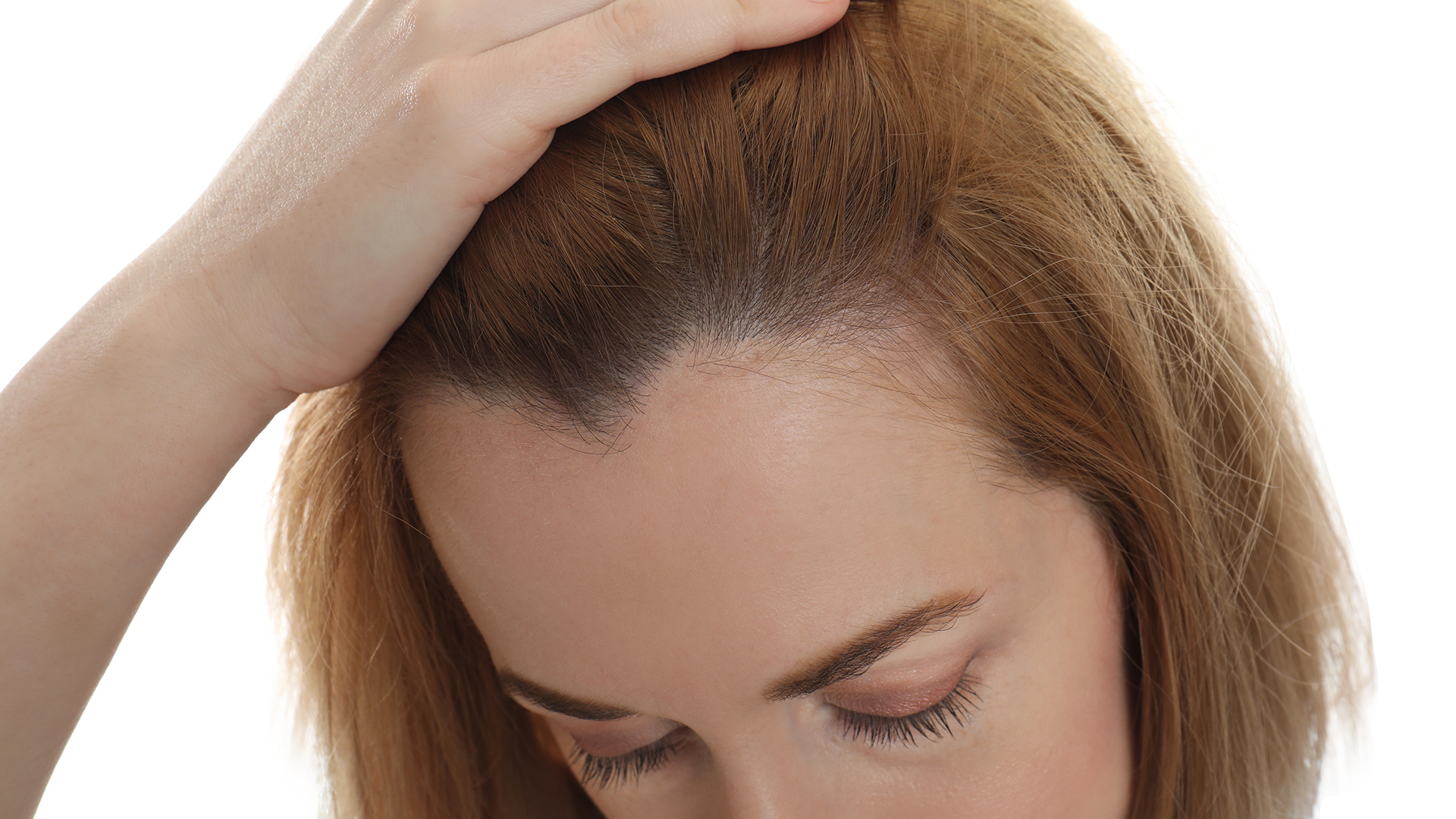
A person may be suitable for FUE hairline lowering when the cause of the high or receding hairline has been identified, the pattern is stable or appropriately managed, the donor scalp can supply useful follicles without being visibly depleted, and the proposed design remains credible if native hair changes in the future. Wanting a lower line is only the starting point—not the indication by itself.
The essential idea
Suitability is a balance between a finite donor supply and a potentially changing recipient demand. FUE redistributes existing follicles; it does not create new hair or stop the process affecting non-transplanted follicles. A technically possible hairline is not necessarily a sustainable one. The safest plan must account for the diagnosis, donor stability, hair characteristics, requested area, future loss and the amount of donor reserve left untouched.
Suitability is not a yes-or-no checklist
Dr Ducu Clinics performs hairline lowering using follicular unit extraction. Individual follicular units are removed with small punches from a suitable donor area—usually at the back or sides of the scalp—and placed into a planned area in front of or within the existing frontal hairline. The clinic describes potential candidates as selected people with a high, receding or thinned frontal hairline, adequate donor hair and a stable or appropriately managed pattern of loss.
Those conditions interact. Strong donor hair does not make an unstable pattern safe to ignore. Stable hair loss does not compensate for a weak or miniaturising donor region. A realistic design may require fewer grafts than an aggressive one, preserving options for later life.
Suitability can also change. A person may be unsuitable today but appropriate after the cause has been investigated or the pattern observed and managed. Another person may remain a poor candidate because the donor supply cannot meet the likely lifetime demand. Deferral or refusal can therefore be a sound clinical outcome, not a failed consultation.
First question: why is the hairline high or changing?
A naturally high but stable hairline and a hairline moving backwards because of progressive alopecia can look similar in one photograph. Their long-term planning is different. History and scalp examination should establish whether the appearance is constitutional, patterned hair loss, traction-related, inflammatory or scarring alopecia, a consequence of illness or medication, or related to previous surgery or trauma.
Pattern
Where is density changing?
Front, temples, mid-scalp, crown and donor region are assessed together, not as isolated photographs.
Tempo
How quickly has it changed?
Serial photographs, history and examination can be more informative than a single impression of stability.
Scalp
Is there active disease?
Redness, scale, pain, pustules, loss of follicular openings or scarring may require diagnostic assessment before surgery.
Context
What else has changed?
Health, hormones, nutrition, medication, styling practices and family history can alter the diagnostic picture.
The NHS notes that hair transplantation is generally used for permanent hereditary baldness and is not usually suitable for some other causes, such as alopecia areata. Selected stable scars may sometimes be treated, but blood supply, tissue quality and disease activity affect graft survival. When the diagnosis is uncertain, further medical or dermatological assessment may be more important than booking surgery.
What hair-loss stability actually means
Stability does not mean that no hair has fallen in the shower for a few weeks. Hair naturally cycles. The relevant issue is whether the clinical pattern and degree of miniaturisation are changing in a way that could leave the transplanted line isolated from thinning native hair.
| Evidence | What it may reveal | Limitation |
|---|---|---|
| History over time | Timing, speed, triggers, treatment response and family pattern. | Memory and styling can make change difficult to quantify. |
| Standardised photographs | Visible movement of the line or change in density under comparable conditions. | Lighting, hair length, fibres and wetness can mislead. |
| Scalp and hair examination | Distribution, shaft diversity, miniaturisation, inflammation and scarring. | Findings may require specialist interpretation or follow-up. |
| Response to management | Whether an appropriately selected medical plan has stabilised progression. | Response varies, requires time and does not guarantee permanent stability. |
Age alone does not prove stability. Younger patients may have an incompletely expressed future pattern, but an older patient can also have active loss. The decision should rest on diagnosis, examination and trajectory rather than a universal minimum age.
If loss is active, management or observation may be discussed before transplantation. Medicines have contraindications and side effects and should not be started, stopped or presented as mandatory without individual medical advice.
Donor hair: more than a density number
The donor area is not an unlimited bank. FUE removes follicular units from it permanently. Assessment must estimate what can be harvested while leaving an even, acceptable appearance and preserving reserve for possible future work.
| Feature | Why it matters | Planning consequence |
|---|---|---|
| Follicular-unit density | Influences how many units may be distributed across a harvest zone. | Low density can restrict graft numbers and increase visibility of extraction. |
| Hair calibre | Thicker shafts usually provide more visual coverage than fine shafts. | The same graft count can create different apparent density. |
| Hairs per follicular unit | Single-hair units suit the leading edge; multi-hair units add coverage behind it. | Composition matters alongside the total number of grafts. |
| Curl and colour contrast | Curl can increase coverage; strong hair-to-scalp contrast can reveal gaps. | Visual density cannot be predicted from graft count alone. |
| Miniaturisation and distribution | A donor region affected by diffuse thinning may not remain dependable. | The apparent safe zone may need to be reduced or surgery reconsidered. |
| Scalp and healing history | Scars, inflammation, previous harvest and healing tendency affect risk. | Technique, extraction pattern or candidacy may change. |
The “safe donor zone” is not a stencil identical for every head. Boundaries vary, and hair within the donor region can show age-related change or miniaturisation. Recent research also challenges the assumption that the occipital scalp is always an unaffected control in advanced androgenetic alopecia.
Over-harvesting can leave patchy thinning, a visible “window” effect, scars and reduced flexibility for later restoration. Wearing the hair long may conceal some donor change, but concealment is not preservation.
The proposed hairline determines graft demand
Lowering the line increases the surface area that must be populated. Demand then rises further with temple work, a broad forehead, strong hair-to-skin contrast or a request for high density. Moving a drawn line a small distance on the forehead can therefore have a disproportionate effect on graft requirements.
Position
How low?
A lower leading edge expands the recipient area and may look less appropriate as facial proportions and native hair change.
Width
How broad?
Closing both temples and lowering the centre can require substantially more coverage than refining one segment.
Density
How opaque?
The appearance of fullness depends on hair calibre, curl, contrast, direction and styling—not only units per square centimetre.
Future
What remains?
A sustainable plan reserves donor hair for possible thinning behind the newly created line.
A conservative design is not simply an aesthetic preference. It is a risk-management decision. The line must connect naturally with temporal points, direction and future pattern. Creating a dense, juvenile line in front of unstable native hair can produce an unnatural island if recession continues.
Expectations that can—and cannot—be met
The aim is an improvement that makes sense for the available donor hair and the person’s future pattern, not replication of a digital filter or another person’s hairline. Psychological readiness and the meaning attached to the procedure are part of selection, not an optional extra.
| Expectation | What FUE may offer | Boundary |
|---|---|---|
| A lower-looking frontal line | Follicles can be placed in front of the existing line to create coverage. | FUE does not physically advance the scalp or remove forehead skin. |
| A natural leading edge | Single-hair grafts, irregularity, angle and direction can support a natural transition. | Hair growth and exact density cannot be guaranteed. |
| Better framing of the face | A considered line may change perceived forehead proportions. | Surgery cannot guarantee satisfaction, confidence or a particular social response. |
| A permanent solution to hair loss | Successfully growing grafts may retain useful donor characteristics for many years. | Native hair can continue to thin, graft survival varies and ageing continues. |
Published reviews highlight psychological screening because intense preoccupation, repeated procedure-seeking or expectations that surgery will solve broad life problems can predict dissatisfaction. A compassionate decision to pause and seek appropriate support protects the person; it is not a judgement about the legitimacy of their distress.
A realistic candidate understands the recovery, initial shedding, months-long growth process, possibility of incomplete density, visible scarring, ongoing native loss and potential need to preserve donor hair rather than use it all in the first procedure.
Who may be suitable, borderline or unsuitable now
These categories are decision frameworks, not diagnoses. One finding rarely decides the case on its own.
May be suitable
Matched supply and demand
A defined diagnosis, stable or managed pattern, healthy scalp, adequate donor characteristics and a sustainable design align.
May need time
Trajectory is unclear
Recent or rapid change, incomplete records, active shedding or a new treatment plan may make observation more informative than immediate surgery.
May need another pathway
Diagnosis or anatomy differs
Active scarring disease, alopecia areata, diffuse donor thinning or a desire for immediate scalp advancement changes the discussion.
May be unsuitable
Risk exceeds likely benefit
Insufficient donor reserve, medically unsafe surgery, active disease or expectations outside achievable limits may justify declining FUE.
Women and men should not be assumed to have the same pattern. Recent reviews emphasise that diffuse thinning and donor preservation can be particularly relevant in women, who may also require assessment for systemic contributors, scarring or traction alopecia. Hair length or a cosmetically dense-looking occiput does not by itself prove strong donor capacity.
What a responsible consultation should establish
The consultation is where the long-term plan is built. GMC guidance for cosmetic interventions emphasises clear discussion of benefits, outcomes and risks, consent by the treating doctor and sufficient time for reflection.
Assessment 01
Diagnosis and trajectory
The cause, distribution, duration, rate of change and activity of hair loss are recorded.
Assessment 02
Donor map
Density, calibre, follicular composition, miniaturisation, scars and previous harvesting are examined.
Assessment 03
Design test
Position, width, temporal connection, direction, surface area and graft demand are considered together.
Assessment 04
Lifetime plan
Potential future loss, medical management, donor reserve, alternatives and the consequences of further surgery are discussed.
Useful questions include:
- What diagnosis explains my hairline, and what evidence suggests that it is stable?
- Is there miniaturisation in the proposed donor area or behind the frontal line?
- How was the graft estimate calculated from surface area and desired density?
- How much donor reserve would remain after this plan?
- How would the design look if native hair receded further?
- Who performs extraction, recipient-site creation and placement?
- What would make you postpone or advise against surgery?
Selection-related risks: when the plan fails before surgery begins
Some poor outcomes originate not from one technical mistake but from an unsuitable starting plan. Examples include operating through active disease, harvesting from an unstable donor zone, using too much reserve on a low line, ignoring future recession, promising unrealistic density or transplanting before the diagnosis is clear.
FUE also carries procedural risks including pain, swelling, bleeding, infection, folliculitis, temporary shedding, altered sensation, cysts, poor graft growth, scarring, donor depletion, patchy harvesting, asymmetry, unnatural angle or direction and, rarely, skin injury or necrosis. A 2026 review groups complications across the donor area, recipient area and general postoperative period and specifically identifies donor depletion and the window effect associated with over-harvesting.
Seek prompt review if recovery is worsening rather than settling
Severe or increasing pain, rapidly worsening swelling, persistent or heavy bleeding, fever, pus, spreading redness, an unpleasant smell, darkening or breakdown of scalp skin, or a sudden concerning change in the donor or recipient area requires prompt contact with the treating team. Severe symptoms or feeling acutely unwell may require urgent NHS assessment.
The possibility that the transplant grows but the overall appearance becomes unnatural after further native loss should be treated as a material long-term risk. Preserving donor hair and choosing a sustainable line are part of complication prevention.
Frequently asked questions
Is a naturally high hairline suitable for FUE lowering?
How is hair-loss stability checked?
Am I too young for hairline lowering?
Does thick hair mean I have a strong donor area?
Can long hair hide a weak donor area?
Why does hair calibre affect the result?
What is donor miniaturisation?
Can beard or body hair replace limited scalp donor hair?
Why might a surgeon recommend a higher line than I requested?
Can FUE be performed during active shedding?
Are women suitable for FUE hairline lowering?
Can traction-related hairline loss be transplanted?
Does medical treatment guarantee stability before surgery?
Why keep donor grafts in reserve?
What would make expectations unrealistic?
Individual assessment
Test the long-term plan before committing donor hair
A consultation can assess the diagnosis, stability, donor capacity, realistic design, graft demand, alternatives and material risks. It does not commit you to surgery.
Medical and regulatory sources
- Dr Ducu Clinics: FUE Hair Transplant for Hairline Lowering
- NHS: Hair transplant
- Hair Transplant: Patient Candidacy, Medical Optimization, and Surgical Considerations
- Is Every Patient of Hair Loss a Candidate for Hair Transplant?
- Hair transplantation—sustainably planned and performed by the physician
- Complications in follicular unit excision hair transplantation: current evidence and practical approaches
- Hair Transplantation in Women
- Psychological Dimensions of Hair Transplantation: A Narrative Review of Current Evidence
- GMC: Guidance for doctors who offer cosmetic interventions
- ASA/CAP: Guidance on marketing cosmetic interventions