
 English
 Spanish
 Arabic
 Chinese
 French
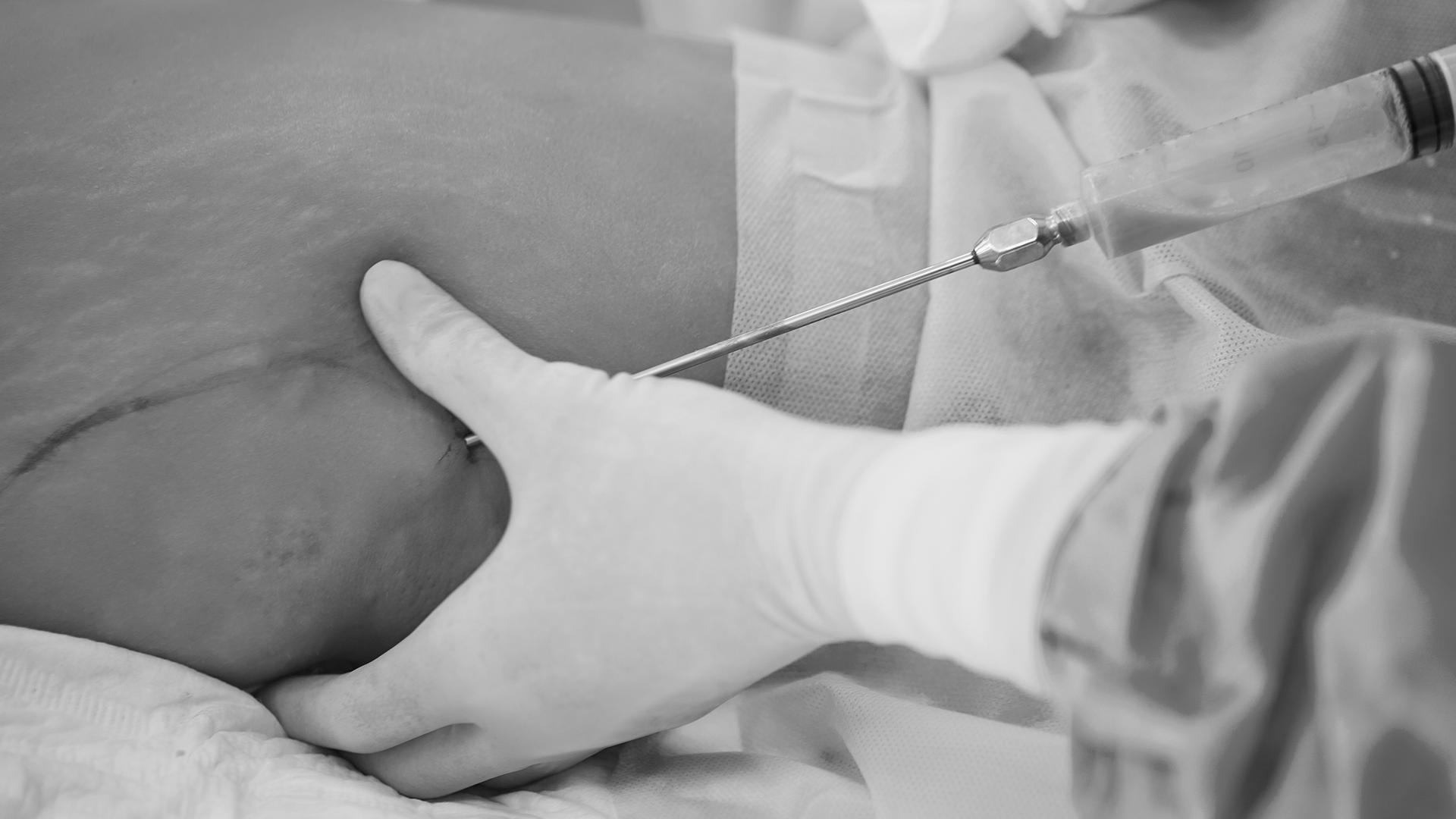
BBL filler removal · Clinical assessment
A BBL filler removal consultation begins by establishing what was injected, where it is now and what problem needs to be addressed. “Removal” can mean reducing selected hyaluronic acid deposits, treating a complication, investigating an unknown material or discussing a surgical referral. These are different clinical situations and they do not share one standard solution.
At Dr Ducu Clinics, we review the original treatment history, current symptoms, buttock anatomy and the condition of the surrounding tissue before discussing management. Ultrasound may be used where clinically indicated to help assess filler location, depth and distribution. A consultation does not guarantee that filler can—or should—be treated on the same day.
The central question is not simply “Can it be dissolved?” It is whether the material is compatible with hyaluronidase, whether infection or inflammation is present, whether intervention could introduce additional risk and what result is realistic after volume is reduced.
What the consultation must establish
People seek assessment for different reasons: discomfort, excessive volume, asymmetry, palpable lumps, an irregular surface, suspected migration, inflammation or a result that no longer matches their preference. The same visible contour can arise from very different causes, including filler position, normal asymmetry, fat distribution, fibrosis, previous surgery, an inflammatory nodule or a collection.
Our first task is therefore to define the problem rather than assume that every concern represents “too much filler”. Management that is reasonable for a stable, non-tender hyaluronic acid deposit may be inappropriate for hot, painful tissue, an abscess, an unidentified permanent product or a structural issue unrelated to filler.
Material
What was injected?
Product name, composition, batch information and whether more than one substance was used affect every later decision.
Location
Where is it now?
Depth, spread, migration, tissue planes and nearby vessels matter more than the surface outline alone.
Tissue state
Is it quiet or complicated?
Pain, warmth, redness, fluctuance, skin change or systemic symptoms can redirect the plan towards medical treatment.
Goal
What would improvement mean?
Targeted reduction, symptom management and complete volume reversal are not the same objective.
Reconstructing the filler history
The most useful preparation is evidence of the original treatment. Product labels, implant or treatment cards, invoices, consent documents, clinic notes and before-and-after photographs may identify the manufacturer, product family, batch, date, volume, entry points and treating practitioner. This matters even when treatment was performed abroad or several years ago.
We also ask about every later procedure in the buttocks, hips and lower back. Hyaluronic acid filler may coexist with fat transfer, implants, silicone, biostimulatory material or scar tissue. A previous attempt at dissolution, aspiration, massage, injection or surgery may change both the anatomy and interpretation of imaging.
| Information | Why it matters | If it is unavailable |
|---|---|---|
| Exact product | Only hyaluronic acid is expected to respond to hyaluronidase; cross-linking and formulation can affect response. | Do not assume that a product described as “filler” is dissolvable. |
| Dates and volumes | Repeated or large-volume treatment can create layered deposits and a more complex contour. | The achievable reduction and number of stages become less predictable. |
| Injection plane | Depth and distribution influence accessibility, risk and whether ultrasound is useful. | Examination and imaging may be needed before intervention. |
| Previous complication | Infection, delayed inflammation, vascular symptoms or an allergic reaction can change urgency and treatment. | Records from the original provider or hospital may be requested. |
| Prior corrective treatment | Earlier enzyme, antibiotics, steroids, drainage or surgery can alter findings and response. | A cautious staged assessment may be safer than empirical treatment. |
Medical history includes allergies, reactions to bee or wasp stings, previous hyaluronidase exposure, asthma or severe allergy, immune or inflammatory conditions, infection risk, bleeding problems, healing, pregnancy or breastfeeding and current medicines or supplements. Medicines should not be stopped without advice from the relevant prescriber.
Examination, anatomy and ultrasound
We examine both buttocks and their transitions with the hips, lower back and upper thighs. Assessment may include the person standing and lying down, because pressure and position can alter the appearance and palpability of a deposit. We document asymmetry, skin colour and temperature, tenderness, firmness, mobility, fluctuance, scars, entry marks, sensation and any visible migration pattern.
The gluteal region is thick, three-dimensional and crossed by important vessels and nerves. Surface inspection cannot reliably show the depth or identity of previous material. Ultrasound may help map deposits, distinguish some material patterns, assess surrounding tissue and identify features such as a collection or increased vascularity. Colour Doppler can add information about blood flow.
Step 1
Document
We compare both sides, the original goal and the current symptom or contour rather than treating a photograph alone.
Step 2
Palpate
Firmness, tenderness, skin attachment and fluctuance may suggest different causes, but touch alone cannot identify every filler.
Step 3
Map
Where indicated, ultrasound helps relate material and tissue findings to depth, distribution and vascular anatomy.
Step 4
Classify
The plan separates stable aesthetic concerns from suspected infection, inflammation, migration or another diagnosis.
Ultrasound is a decision aid, not a guarantee. Some products have overlapping appearances, diffuse material can be difficult to measure and imaging cannot always confirm composition without reliable records or further investigation. It also cannot make an injection or removal procedure risk-free.
Aesthetic concern, inflammation or infection?
An uncomplicated aesthetic concern may be stable, non-tender and unaccompanied by skin or systemic symptoms. Inflammation can present with firmness, swelling, tenderness or recurrent nodules. Infection may involve increasing pain, warmth, redness, drainage, an abscess, fever or feeling unwell. These categories can overlap, and a delayed reaction can occur months after injection.
This distinction changes treatment. Current consensus literature does not support treating suspected infection as a routine elective dissolution problem. Infection may require drainage, microbiological sampling, antibiotics, imaging or hospital/specialist care. Injecting blindly into infected or unidentified tissue can delay diagnosis or worsen harm.
| Presentation | Assessment focus | Planning implication |
|---|---|---|
| Stable excess volume or asymmetry | Material, distribution, natural asymmetry and how much reduction is actually desired. | Observation or staged targeted reduction may be discussed if HA is confirmed. |
| Firm or recurrent nodule | Non-inflammatory product deposit, fibrosis, granulomatous reaction or low-grade infection. | Diagnosis should guide treatment; enzyme is not automatically the first step. |
| Red, hot, painful or draining area | Infection, abscess, tissue compromise and systemic illness. | Urgent medical management may take priority over cosmetic correction. |
| Suspected migration | Product pathway, depth, symptoms and relation to nearby structures. | Imaging and staged or specialist management may be required. |
| Unknown or permanent material | Product records, imaging pattern, tissue damage and previous reactions. | Hyaluronidase is not a universal solution; specialist or surgical referral may be needed. |
How a management plan is built
When hyaluronic acid filler is sufficiently established and treatment is clinically appropriate, hyaluronidase may be considered to break it down. Hyaluronidase is a prescription-only medicine in the UK and its use requires an appropriate medical assessment, prescribing decision and consent discussion. Product characteristics, deposit size, cross-linking, depth and tissue response can influence how readily filler responds.
A plan may be deliberately staged. Targeted treatment can make it easier to observe response, reassess contours after swelling settles and avoid pursuing an unrealistic one-session “reset”. Our procedure page notes that effects may begin to be seen within 24–48 hours, but early swelling can obscure the result and multiple sessions or follow-up appointments may be required.
| Decision | When it may be considered | Important limit |
|---|---|---|
| Observe and review | The concern is stable, risk of intervention may exceed benefit or diagnosis is not yet clear. | Observation still needs safety-net advice if symptoms change. |
| Targeted HA dissolution | Hyaluronic acid is established and a defined deposit or volume is appropriate to reduce. | Response can be incomplete, uneven or require more than one stage. |
| Medical complication pathway | Findings suggest infection, abscess, significant inflammation, vascular injury or systemic illness. | Urgent investigation or treatment takes priority over appearance. |
| Specialist or surgical referral | Material is permanent, unknown, deep, extensive or associated with tissue damage. | Complete extraction may be impossible or create scars and contour loss. |
Local anaesthetic may be used where clinically appropriate, depending on the procedure selected. Consent must cover the planned method, medicine or device, expected benefit, alternatives, uncertainty, material risks, follow-up and what happens if the response is incomplete. The consultation itself should not create pressure to proceed. Our article on how BBL filler removal is planned explains how technique changes with the type of product.
What filler removal cannot guarantee
Dissolving filler removes support as well as unwanted volume. Pre-existing asymmetry, skin laxity, cellulite, hip dips, fat distribution and surgical irregularity can reappear or become more visible. Tissues may not return to the exact size, texture or position seen before augmentation, particularly after large volumes, repeated treatments, migration, fibrosis or inflammation.
The published evidence for hyaluronidase is dominated by facial filler practice, laboratory work, small studies and expert consensus. Gluteal deposits involve larger treatment areas and different anatomy. Evidence does not justify promising complete removal, one-session correction or a standard enzyme dose for every product and body site.
Reduction is not reconstruction
Removing or reducing filler cannot repair tissue loss, reverse vascular damage, eradicate every infection, remove scar tissue or recreate the precise pre-treatment contour. If correction later involves adding new filler, that is a separate high-risk buttock augmentation decision with its own assessment and consent—not an automatic part of removal.
Risks, follow-up and warning signs
Potential effects and complications depend on the method used. They may include pain, tenderness, swelling, bruising, bleeding, infection, entry-point marks, asymmetry, contour irregularity, loose-looking skin, incomplete reduction, unintended loss of wanted volume, altered sensation, scarring, further inflammation and the need for additional treatment or referral.
Hyaluronidase can cause local reactions and, rarely, serious allergic reactions including anaphylaxis. Allergy history—including bee or wasp sting reactions—may be relevant because of potential cross-reactivity discussed in clinical guidance. Testing and emergency planning depend on the clinical context; a test does not eliminate all risk. Injection itself also carries vascular, bleeding and infection risks.
Seek urgent help for severe or rapidly changing symptoms
Contact our clinical team promptly after treatment for increasing pain, spreading redness, warmth, pus, fever, rapidly worsening or one-sided swelling, blistering, pale or dark skin, new numbness or weakness, wound breakdown or a result that changes suddenly.
Call 999 for breathing difficulty, facial or throat swelling, collapse, chest pain, coughing blood, sudden severe breathlessness, confusion or another life-threatening emergency. NHS 111 can advise when urgent help is needed but the situation is not immediately life-threatening.
Follow-up is part of the plan, not proof that another procedure is required. Swelling must settle before the contour is judged. A later review may lead to observation, further targeted treatment, investigation, referral or a decision that additional intervention would not be beneficial.
To prepare for this discussion, our article on medicines and supplements before BBL filler removal lists the medicines, previous treatments and allergies that should be disclosed.
Frequently asked questions
What records should I bring to a BBL filler removal consultation?
Can every type of buttock filler be dissolved?
Can ultrasound prove exactly which filler was used?
Will ultrasound be used in every consultation?
Can filler from another clinic or another country be assessed?
Can filler be dissolved during the first appointment?
Does hyaluronidase remove all hyaluronic acid in one session?
How quickly can a result be judged after dissolution?
Will my buttocks return to their exact pre-filler appearance?
Can an infected filler lump simply be dissolved?
Does hyaluronidase have allergy risks?
Can migrated filler be treated?
Can only one side or one lump be treated?
Can new filler be added immediately after removal?
Why might we recommend referral or no treatment?
Individual assessment
Establish the material and tissue findings before planning removal
Our consultation reviews previous filler, present anatomy, symptoms and realistic management options. It may lead to observation, imaging, staged treatment, medical care, referral or a decision not to intervene.
Medical and regulatory sources consulted
- Dr Ducu Clinics: BBL Filler Removal & Complication Assessment
- Ultrasonographic evaluation of cosmetic fillers: patterns and frequent complications
- Ultrasound anatomy of the gluteal region and mapping of fillers
- Guideline for the safe use of hyaluronidase in aesthetic medicine
- Hyaluronidase for dermal filler complications: applications and dosage recommendations
- Late-onset reactions after hyaluronic acid dermal fillers: consensus recommendations
- JCCP and partner bodies: Buttock augmentation and other body contouring procedures
- NHS: Choosing who will do your cosmetic procedure
- GMC: Guidance for doctors who offer cosmetic interventions
- ASA/CAP: Guidance on marketing cosmetic interventions