
 English
 Spanish
 Arabic
 Chinese
 French
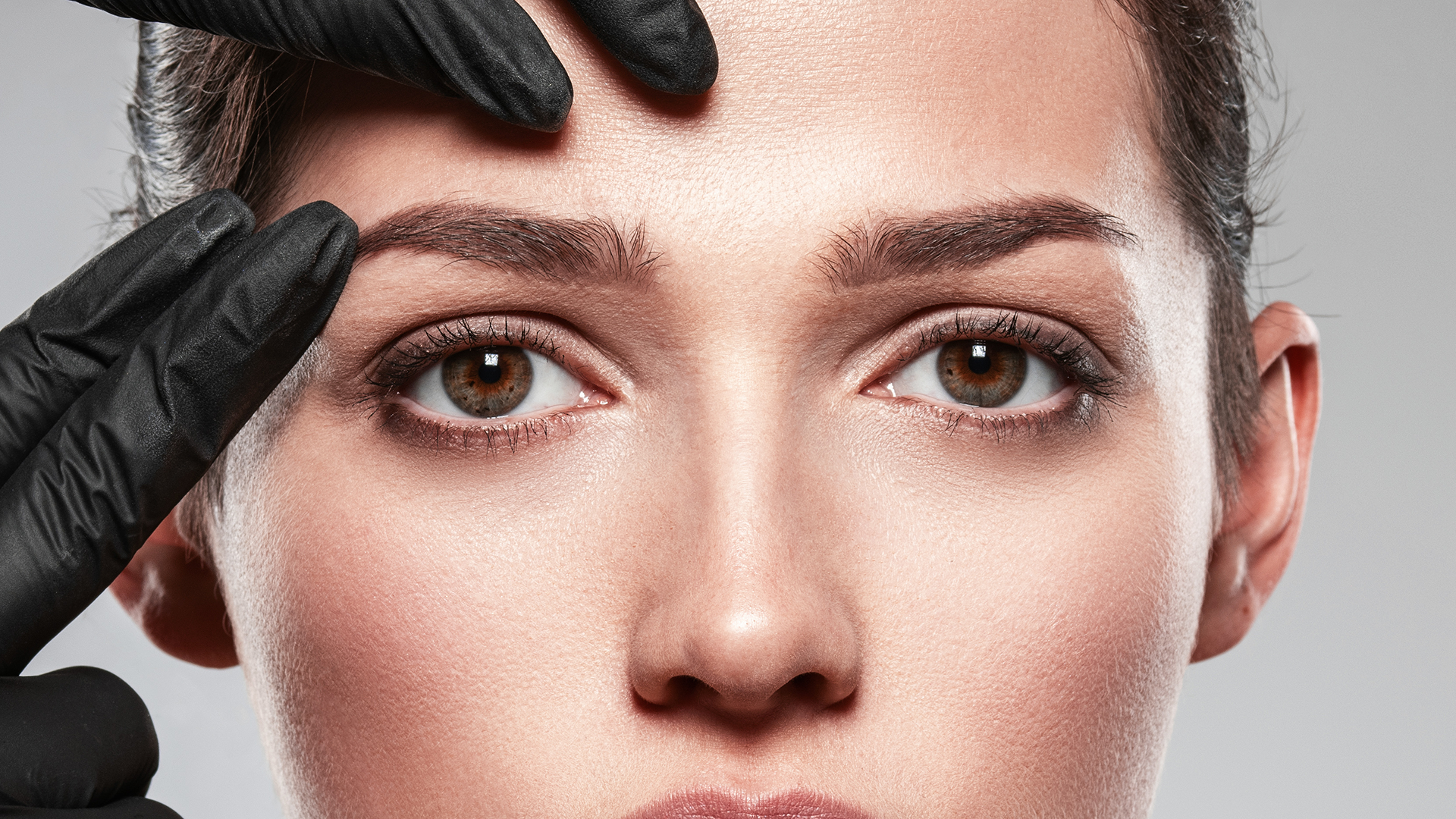
FUE eyebrow transplant · Consultation and design planning
An eyebrow-transplant consultation is where an outline becomes a surgical plan—or where we decide that transplantation should not proceed. At Dr Ducu Clinics, we assess the cause and stability of eyebrow loss, map each brow in relation to the moving face, examine recipient skin and select donor hairs by calibre, curl and growth behaviour. We also discuss realistic density and the ongoing trimming and grooming that scalp-derived follicles may require.
The essential idea
Mapping defines a zone; donor-hair behaviour determines whether that zone can become a believable eyebrow. A symmetrical pencil outline does not show how a transplanted shaft will curve, lie against the skin or grow over time. Consultation must connect the head, body and tail design with suitable follicular units, changing hair directions, safe density, recipient-skin quality and the maintenance the person is prepared to perform.
What the consultation must establish
Our FUE eyebrow transplant moves selected follicular units from a donor area—commonly scalp hair near the side of the head or ear—into recipient sites within an agreed brow design. It is surgery performed under local anaesthetic and creates small extraction and implantation wounds. The aim may be greater density, reconstruction of missing areas or a change in shape, but no particular symmetry, density or graft survival can be guaranteed.
Before a procedure is recommended, the consultation must connect four decisions:
Diagnosis
Why is hair absent?
Naturally sparse growth, past removal, trauma, scarring and active hair disorders do not have the same prognosis.
Map
Where should hair sit?
The outline must work with facial asymmetry, existing hairs, muscle movement and the changing directions within each brow.
Material
Which hairs are compatible?
Calibre, curl, shaft direction, growth length and the availability of single-hair units affect the visual match.
Ownership
Can the result be maintained?
Scalp-derived hairs may grow longer than native brow hair and can require continuing trimming, positioning and grooming.
The consultation is not a promise of surgery. It may show that the loss needs medical assessment, that the skin or donor match is unsuitable, that the requested outline is not compatible with hair growth, or that a non-surgical styling option better fits the objective.
How to prepare for an eyebrow-transplant consultation
Useful preparation helps us see both the current anatomy and the history behind it. Do not stop prescribed medicine or start a hair treatment solely for the appointment unless the relevant clinician has advised this.
| What to bring or explain | Useful detail | Why it matters |
|---|---|---|
| Earlier photographs | Images before thinning, over-plucking, trauma, surgery, tattooing or a medical condition. | May show the original distribution and whether loss has changed or stabilised. |
| Usual brow routine | How the brows are pencilled, tinted, threaded, waxed, laminated or trimmed. | Shows the preferred outline and whether that preference depends on pigment, styling or actual hair. |
| Skin and hair history | Sudden loss, itching, scale, redness, scarring, alopecia, dermatitis and previous treatment. | Active or unexplained disease may need diagnosis and control before surgery. |
| Medical information | Conditions, allergies, healing and scarring history, operations, medicines and supplements. | Can affect hair loss, bleeding, infection, anaesthesia, healing and surgical suitability. |
| Cosmetic pigment records | Dates, technique, pigment changes, laser removal and reactions after microblading or tattooing. | Pigment can influence the visible outline while scarring or inflammation can affect recipient planning. |
Where possible, arrive with the eyebrow area clean enough to examine. You may bring photographs of preferred shapes and can explain how you normally fill the brows, but the final map must be assessed without allowing makeup or a template to hide the actual skin and hair distribution.
Cause, stability and recipient skin come before the outline
We review whether the eyebrow has always been sparse, became thinner gradually, changed after repeated hair removal or was affected by trauma, burns, surgery or illness. Sudden, patchy, inflamed or progressive loss can reflect an autoimmune, inflammatory, infectious, endocrine, nutritional, medication-related or scarring process. Transplanting into active disease does not treat that process and may expose the grafts to continuing loss.
Recipient skin is assessed for redness, scale, active dermatitis, infection, pigment, scars, thickness, mobility and blood supply. A mature stable scar may sometimes receive grafts, but fibrosis and reduced perfusion can make survival and density less predictable. A cosmetic tattoo can guide what the person is accustomed to seeing, but it does not prove that the underlying skin is suitable.
Where the cause or activity is uncertain, we may recommend medical or dermatological assessment, records, treatment or observation before mapping becomes a surgical plan. Waiting is not lost time when it prevents surgery from being planned on an unstable diagnosis.
How eyebrow mapping works
Mapping records the intended boundaries and allows the person and surgeon to discuss shape before any recipient sites are created. It is performed in relation to the eyes, orbital rims, nasal landmarks, forehead, existing hairs and the way the brows move with facial expression. Proportional guides can be useful, but there is no universal “golden ratio” that produces the correct eyebrow for every face.
We compare the brows with the face relaxed and during movement. Habitual elevation of one brow, differences in the orbital skeleton and asymmetrical muscle activity can change their visible height. Drawing identical shapes at rest cannot guarantee that they will move identically or look mathematically equal from every angle.
Observe
Native anatomy
We document existing hairs, skin landmarks, facial asymmetry and movement before drawing a new boundary.
Draw
Alternative outlines
Width, medial start, arch position, thickness and tail length can be compared rather than assumed from one template.
Test
Hair-direction feasibility
The outline is checked against the acute angles, curves and crossing directions needed for hairs to lie naturally.
Agree
Limits and trade-offs
We explain what grafting may change, what asymmetry remains and how design choices alter graft demand and maintenance.
Mapping is a planning aid, not a preview guarantee. Healing, graft survival, hair curl and later growth affect the final position and visual density. The design may also need minor reassessment on the day of surgery once the skin and native hairs are prepared.
The head, body, arch and tail are not filled in the same way
An eyebrow is a directional structure rather than a uniformly coloured strip. Published reviews describe different density and orientation patterns across its segments. The plan must change gradually from medial to lateral and from upper to lower border.
| Brow zone | Natural pattern to consider | Planning risk |
|---|---|---|
| Medial head | Hairs can rise more vertically before turning laterally, usually with a soft irregular boundary. | A dense square block or identical upright rows can look artificial. |
| Central body | Upper and lower hairs may converge or overlap to create visual fullness. | Uniform parallel placement can miss the layered pattern and expose gaps. |
| Arch | The direction transitions while the outer contour changes height. | A sharp geometric peak may not work with the natural shaft curve or facial movement. |
| Lateral tail | Hairs usually become finer, flatter and more laterally directed. | Coarse or upward-curving grafts can appear conspicuous in a narrow tail. |
| Borders and transitions | Soft variation helps the brow blend into untreated skin and native hair. | A continuous hard edge can resemble pigment rather than natural follicular growth. |
The intended exit angle is especially important. Eyebrow hairs lie close to the skin; a graft placed too upright can project like a canopy even if it survives. Natural curl must face in a compatible direction because implantation cannot reliably cancel an unsuitable shaft curve.
How donor hairs are selected
The donor area is not selected only because it contains hair. We look for follicles whose visible characteristics can work within the mapped segment while preserving an acceptable donor appearance. Our procedure page notes that the side of the scalp near the ear is commonly assessed, but the most suitable site varies between patients.
The consultation considers the following characteristics together:
Calibre
Fine versus coarse
Finer shafts often blend more softly at the borders and tail; a coarse shaft may look heavy even in a well-drawn outline.
Curl
Direction of the curve
The natural bend must be recognised and oriented so that the future shaft tends to follow rather than lift away from the brow.
Unit size
Single-hair follicles
Individual hairs are commonly preferred for delicate borders; multi-hair units can appear tufted if used without segment-specific reasoning.
Growth behaviour
Length and grooming
Scalp follicles generally retain donor characteristics, so transplanted hairs may grow longer and faster than native eyebrow hair.
Colour contrast and greying may also affect the visual match. A donor region that is technically harvestable is not necessarily suitable for every brow segment. If compatible follicles are scarce, the design or density target may need to change.
Density is planned as a pattern, not a maximum number
The estimated graft requirement depends on the mapped surface, existing hairs, scar quality, follicular-unit type and the distribution needed across the head, body and tail. Published techniques use different graft counts and densities, so a number from another patient or paper is not a personal prescription.
Packing more recipient sites into a small area is not automatically better. The sites compete for limited space and depend on recipient blood supply. Excessive density, traumatic handling or unsuitable placement can increase tissue injury and does not guarantee that more grafts will survive.
We explain whether the initial objective is reconstruction, coverage of selected gaps, border definition or additional visual density. A future second procedure may sometimes be considered after full maturation, but it should not be promised in advance. First-session growth, direction, scars, donor availability and recipient perfusion must be reassessed. Our article on how FUE eyebrow transplantation is planned explains how a density pattern is turned into a surgical plan.
Maintenance is part of the design decision
A transplant uses living follicles, not fixed cosmetic strokes. Successfully established scalp-derived hairs commonly retain enough of their donor growth behaviour to require regular care. Consultation should make that responsibility visible before the mapped outline is accepted.
| Maintenance issue | What may be required | Planning implication |
|---|---|---|
| Length | Continuing trimming at a frequency determined by individual growth. | A person unwilling to trim scalp-derived hairs may not accept the practical outcome of transplantation. |
| Direction | Gentle grooming or styling after healing, depending on the way individual shafts emerge. | A mapped shape should remain manageable when hairs are not freshly arranged. |
| Colour | Usual cosmetic colouring may still be desired after complete healing and clinical approval. | Transplantation creates hair but does not guarantee a permanent colour match with native brows. |
| Native brow change | Medical review if original eyebrow hair continues to thin or skin symptoms return. | Transplanted hairs do not stop the condition affecting untreated native follicles. |
| Density or symmetry review | Assessment only after appropriate maturation if growth is uneven or the goal remains unmet. | More grafts are not an automatic solution to poor direction, scarring or unstable disease. |
Tinting, lamination, makeup, threading or other styling should not be resumed during early healing without our advice. Their later use depends on skin recovery, graft stability and the products or techniques involved.
Possible outcomes of the consultation
Proceed to planning
A compatible case
The loss is stable, skin is suitable, donor hairs can support the design and the maintenance requirement is understood.
Revise the map
A design mismatch
The preferred thickness, tail or arch may not work with donor calibre, curl, hair direction, graft supply or facial movement.
Pause
Diagnosis or skin first
Active loss, dermatitis, infection, an immature scar or uncertain medical cause may require assessment, treatment or observation.
Do not operate
Risk outweighs benefit
Unsafe health factors, unsuitable recipient tissue, poor donor match or expectations surgery cannot meet may lead us to decline treatment.
Pigment-based styling, cosmetic grooming or no procedure may remain valid alternatives. They create different effects and have their own risks and maintenance. Choosing not to have surgery is not a failed consultation.
Risks and consent must relate to the individual map
Potential complications include pain, swelling, bruising, bleeding, infection, folliculitis, ingrown hairs, cysts, scarring, altered sensation, temporary shock loss of native hair, poor or uneven graft survival, donor thinning, asymmetry, unnatural density, elevated or incorrect growth direction, visible calibre or colour mismatch, the need for revision and dissatisfaction with the cosmetic result.
A technically surviving graft can still produce an unsatisfactory hair if its angle, curve or calibre does not fit the segment. Conversely, a carefully planned design may mature with less density than intended because not every graft survives. Mapping cannot eliminate these uncertainties.
GMC guidance requires doctors offering cosmetic interventions to discuss expected outcomes, benefits, material risks and alternatives, obtain consent and give time for reflection. The final decision should not be driven by pressure, a same-day offer or the assumption that a drawn outline guarantees the result.
Brow serums, active skincare and previous pigment or laser treatments are also part of the assessment — see medicines, supplements and skin treatments before an eyebrow transplant for what to disclose.
Frequently asked questions
Should I grow my eyebrows before the consultation?
Should I attend without eyebrow makeup?
Can I bring a drawing or photograph of my preferred brows?
Are brows mapped while the face is relaxed?
Does the golden ratio determine the correct brow shape?
Why are the two eyebrows mapped individually?
Are the head, body and tail planned differently?
How is the donor area chosen?
Why does the curve of a donor hair matter?
Will a donor patch need to be trimmed or shaved?
Can the exact graft count be known at consultation?
Can maximum density be created in one session?
What happens to existing eyebrow hairs?
How is future trimming discussed during consultation?
Can tinting, lamination or makeup continue after a transplant?
Individual assessment
Map the brow, donor match and maintenance before deciding
Our consultation assesses the cause of loss, recipient skin, facial movement, segment-by-segment design, donor-hair characteristics, realistic density, risks and long-term grooming. Booking an assessment does not commit you or us to surgery.
Medical and regulatory sources consulted
- Dr Ducu Clinics: FUE Eyebrow Transplant in London
- Eyebrow and Eyelash Hair Transplantation: A Systematic Review
- Hair Transplant for Eyebrow Restoration
- Eyebrow Transplantation Using Long Hair Follicular Unit Excision Technique
- Clinical outcomes and technical tips for eyebrow restoration using single follicular units
- Recipient-site design and minimising vascular damage in hair transplantation
- NHS: Hair transplant
- GMC: Guidance for doctors who offer cosmetic interventions
- ASA/CAP: Guidance on marketing cosmetic interventions