
 English
 Spanish
 Arabic
 Chinese
 French
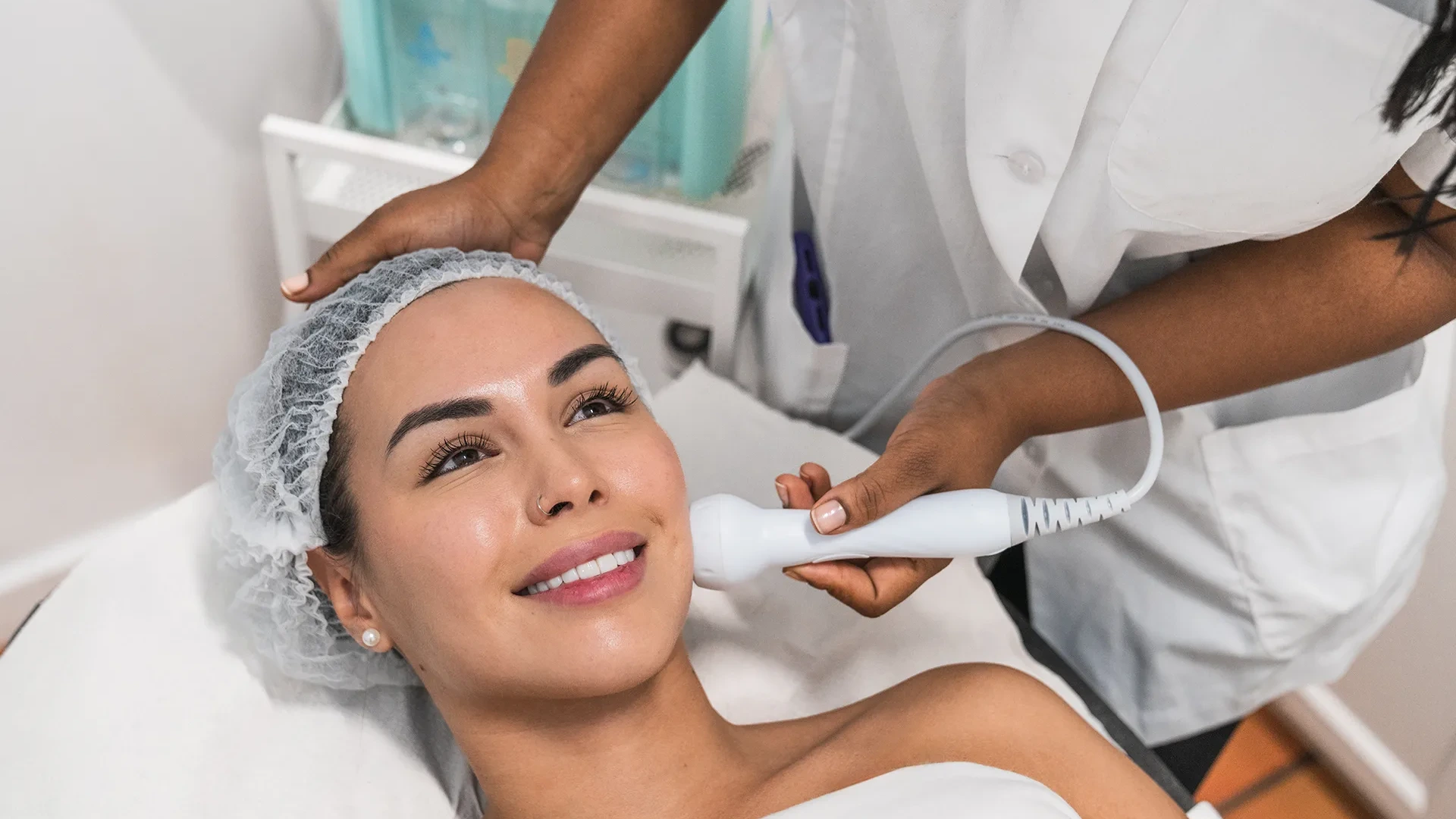
“Non-surgical skin tightening” sounds like one treatment, but it is really an umbrella term. Radiofrequency, microfocused ultrasound, RF microneedling, plasma-based technologies and minimally invasive subdermal energy devices all work differently, reach different tissue depths and have different evidence, recovery profiles and risks.
What they share is a broad aim: to create controlled energy or micro-injury in selected tissues so that tightening, collagen remodelling or textural change may develop over time. The important word is may. Results depend on the technology, treatment area, device settings, anatomy, skin quality and degree of laxity. These procedures should not be presented as a non-surgical equivalent of a facelift or body-lift operation.
This guide separates the technologies, explains what the evidence actually supports and makes clear that recovery and longevity are not universal.
Non-surgical skin tightening is best understood as a family of treatments, not one procedure. Some are non-invasive, some are minimally invasive, and each has different indications and risks. The aim is usually a gradual, limited improvement in firmness or texture — not the structural repositioning achievable with surgery.
Contents
What non-surgical skin tightening actually means
The phrase covers several device categories. Some treatments deliver energy from the skin surface without needles or incisions. Others use microneedles or a small cannula beneath the skin and are better described as minimally invasive rather than non-invasive. Grouping all of them together can make expectations confusing.
A useful consultation starts by defining the actual concern: mild facial laxity, a softer jawline, crepey texture, post-weight-loss looseness, abdominal laxity, upper-arm skin quality, or another issue. The treatment is then matched to the tissue rather than chosen simply because a device is popular.
| At a glance | What it means |
|---|---|
| Non-surgical | No excisional surgery is performed, but some procedures can still penetrate the skin or pass a cannula beneath it. |
| Non-invasive | Energy is delivered without needles or skin entry; examples can include surface RF or microfocused ultrasound, depending on the device. |
| Minimally invasive | Needles, microneedles or a cannula enter the tissue; examples include RF microneedling and some subdermal RF procedures. |
| Expected change | Usually gradual improvement in firmness, texture or selected contour; the degree of change varies. |
| Main limitation | Energy-based treatments do not remove large amounts of excess skin or surgically reposition deeper tissues. |
Why skin can lose firmness
Skin firmness reflects more than collagen alone. Ageing, cumulative ultraviolet exposure, smoking, genetics, hormonal changes, weight fluctuation, pregnancy, previous surgery and the quality of the underlying fat and connective tissue can all influence how firm or loose an area appears.
That is why “stimulating collagen” is not a complete explanation. A person with mild loss of dermal firmness may be a very different candidate from someone with substantial redundant skin after major weight loss. The more the concern is driven by true excess skin or deeper structural descent, the less likely a non-surgical device is to reproduce a surgical result.
Two people can receive the same technology and have different outcomes because their starting tissues are different. Treatment selection should be based on anatomy and the degree of laxity, not on age alone or a standard package.
How energy-based tightening works
Most energy-based tightening technologies create controlled heating or micro-injury at selected depths. That stimulus can produce immediate physical effects on collagen and, more importantly, can trigger a wound-healing response in which collagen remodelling develops over the following weeks and months. The exact biological effect depends on the energy source, temperature, depth, pulse pattern and device.
This gradual biology is why results should not be judged the same day. Early swelling can make an area look temporarily tighter, while the more meaningful remodelling response — when it occurs — develops later. It is also why “instant lift” claims can be misleading when they imply that the first-day appearance is the final result.
Radiofrequency, ultrasound and plasma are not the same
Radiofrequency, focused ultrasound and plasma are often marketed under the same “tightening” label, but their energy delivery is different. They should not be treated as interchangeable simply because they share a cosmetic goal.
| Technology | How it delivers energy | What to understand |
|---|---|---|
| Radiofrequency (RF) | Electrical energy generates controlled heating in tissue. Devices vary from surface systems to invasive or subdermal systems. | Evidence supports modest improvement in laxity for selected face and body indications, but device type and settings matter. |
| Microfocused ultrasound / HIFU | Focused ultrasound creates small thermal zones at selected depths beneath the surface. | Evidence is strongest for selected facial and neck tightening; results are variable and not equivalent to surgery. |
| RF microneedling | Microneedles enter the skin and deliver RF energy at controlled depths. | It combines needling with thermal energy. Serious complications including burns, scarring, fat loss and nerve injury have been reported with some uses. |
| Plasma-based procedures | Different devices use plasma or plasma-derived energy to create controlled tissue effects. | Evidence, invasiveness and risk vary widely by device. Plasma procedures should not be described as one uniform technology. |
Non-invasive and minimally invasive are different categories
“Non-surgical” does not always mean “non-invasive”. A surface radiofrequency session and a cannula-based subdermal RF procedure may both sit under a skin-tightening umbrella while involving very different treatment depths, anaesthesia, recovery and complication profiles.
This distinction matters for informed consent. Patients should know whether a treatment breaks the skin, whether local anaesthetic or sedation is used, whether a device is passed beneath the skin, what temporary restrictions may follow and what complications are specifically associated with that method.
The less invasive option is not automatically the most effective option, and the more invasive option is not automatically the better one. The right level of intervention depends on the problem being treated and whether the expected benefit is proportionate to the risk and recovery.
What patients are usually hoping to improve
“Tightening” is a broad word. In a useful consultation it should be translated into specific, observable goals. Some patients are concerned mainly with surface texture; others want a sharper lower-face contour or improved firmness after weight change. Energy-based procedures do not address every concern equally.
Face, neck and body: why the area matters
The face, neck, abdomen, upper arms and thighs do not have the same anatomy. Skin thickness, subcutaneous fat, underlying muscle, mobile structures and important nerves vary by region. A device setting or depth that is appropriate in one area may be unsuitable in another.
This is especially important around the lower face and neck, where aggressive energy delivery can affect fat compartments or nerves, and on the body, where the visual concern may come from excess skin, fat, fibrosis or a combination. The treatment should address the dominant problem rather than using the same protocol everywhere.
Who may be suitable — and who may need a different plan
Suitability is not decided by age alone. Medical history, implanted electronic devices, pregnancy status, active infection, skin disease, tendency to abnormal scarring, previous surgery, recent injectables and the specific device all matter. Contraindications vary by technology and manufacturer instructions.
Patients with substantial excess skin, significant structural descent or expectations of a surgical-level lift may be better served by a surgical opinion. A consultation can also conclude that no treatment is appropriate at that time. That is part of responsible patient selection, not a treatment failure.
What a good consultation should explore
A good consultation should identify what the patient is actually trying to change, examine the tissue directly, review medical and procedural history and explain whether the proposed technology is appropriate. It should also cover alternatives, expected recovery, the degree of uncertainty and what would make the clinician stop or change the plan.
What treatment day can look like
Treatment day looks different depending on the device. A non-invasive RF or ultrasound session may involve cleansing, gel or coupling medium and repeated passes of an external handpiece. RF microneedling introduces insulated or non-insulated needles into the skin. Minimally invasive subdermal RF may involve local anaesthetic, small entry points and a cannula-based energy device.
Because the techniques vary so much, appointment duration and anaesthetic requirements should not be generalised across the category. The patient should receive a procedure-specific explanation, rather than being told that all skin-tightening treatments are quick, painless or require no recovery.
Recovery: what the first days can look like
Short-term effects can include redness, warmth, tenderness, swelling or temporary sensitivity. Microneedling-based treatments can also produce pinpoint bleeding, crusting or transient dryness. Minimally invasive subdermal procedures may produce bruising, swelling, soreness, altered sensation and temporary activity restrictions.
Recovery should be described in ranges rather than promises. Some patients return to routine activities quickly after a surface treatment, while others prefer several days before an important event. More invasive procedures usually need more structured aftercare. Device settings, treatment area and individual response all affect recovery.
When to judge results — and why fixed longevity promises are risky
Fixed figures such as 12–24 months for the abdomen, one to two years for the arms, 12–18 months for the face and routine top-ups every 12–18 months can look reassuring, but they are not universal across different devices, treatment protocols or patients.
Evidence for some technologies shows improvement that can still be detectable months after treatment, including up to one year in selected facial ultrasound studies. That does not mean every device, body area or patient will have the same duration. Results can also be affected by ongoing ageing, sun exposure, smoking, weight fluctuation and the severity of the original laxity.
Rather than promising a fixed duration, it is more accurate to explain when improvement is usually assessed, what factors affect persistence and whether maintenance is clinically useful after the result has been reviewed.
Risks, limits and warning signs
Energy-based aesthetic procedures can cause complications. The risk profile changes by modality, energy level, depth and treatment area. Potential problems include prolonged redness or swelling, burns, blistering, scarring, pigment change, contour change, infection, altered sensation and nerve injury. Procedures that penetrate the skin add risks associated with needling or cannula entry.
RF microneedling deserves particular care in current patient information. In October 2025, the US FDA issued a safety communication after reports of serious complications with certain aesthetic uses, including burns, scarring, fat loss, disfigurement and nerve damage. This does not mean every RF microneedling treatment is unsafe, but it reinforces the need for correct device selection, training, parameters and patient assessment.
| Possible issue | How to think about it | When to seek review |
|---|---|---|
| Redness, warmth, swelling | Can be expected after some energy-based procedures, depending on intensity and area. | Contact the clinic if symptoms are severe, worsening or last longer than expected for the specific procedure. |
| Burning, blistering or unusual colour change | Can indicate excessive thermal injury or another complication. | Prompt clinical assessment is appropriate; rapidly evolving or severe symptoms need urgent review. |
| Persistent numbness, weakness or severe pain | May suggest nerve or deeper tissue injury. | Seek prompt medical assessment, especially if symptoms are progressive. |
| Discharge, increasing heat or spreading redness | Can be features of infection, particularly after invasive procedures. | Seek clinical review; fever or systemic illness needs urgent medical assessment. |
| Unexpected hollowing or contour change | Fat loss has been reported after some RF microneedling complications. | Persistent or progressive contour change should be reviewed by an experienced clinician. |
In England, the legal framework for licensing non-surgical cosmetic procedures is still being developed. Government consultation work has included radiofrequency, HIFU, plasma procedures and combination technologies within the proposed scope. As of the latest published government update, further consultation and secondary legislation are still required before the full licensing scheme is implemented.
What the evidence actually says
The evidence is strongest when it is tied to a specific technology and indication. Systematic reviews of monopolar and bipolar radiofrequency report measurable improvement in facial and body laxity with acceptable complication profiles in published studies, while also highlighting variation between devices and protocols.
Microfocused ultrasound has a larger facial evidence base. Systematic reviews and meta-analyses report improvement in selected facial and neck laxity outcomes, but studies are heterogeneous and many are not large randomised trials. A 2025 systematic review of HIFU for sagging skin described promising results while still calling for better-quality standardised studies.
The evidence should therefore support a measured message: some energy-based technologies can improve selected forms of mild to moderate laxity, but results are not identical across devices, treatment areas or patients. Claims about one universal treatment course, one fixed duration or a surgical-level lift are not justified by the literature as a whole.
Frequently asked questions
What does “non-surgical skin tightening” mean?
Is skin tightening the same as a facelift?
Which is better: radiofrequency or HIFU?
Does radiofrequency really tighten skin?
Does HIFU work for loose skin?
Is RF microneedling the same as normal radiofrequency?
Is RF microneedling risk-free?
How many sessions will I need?
How quickly will I see a result?
How long do results last?
Is there any downtime?
Can skin tightening remove large amounts of loose skin after weight loss?
Can skin tightening be used on the abdomen and arms?
Who may not be suitable?
What should make me contact the clinic after treatment?
Are these treatments regulated in the UK?
Elsaie ML. Radiofrequency treatments in aesthetic dermatology. Reviews and clinical literature on RF-based skin tightening and rejuvenation.
Suh DH, et al. Minimally Invasive Approach to Skin Tightening of the Face and Body: Systematic Review of Monopolar and Bipolar Radiofrequency Devices. 2022.
Contini M, et al. A Systematic Review of the Efficacy of Microfocused Ultrasound for Facial Skin Tightening. 2023.
Microfocused Ultrasound With Visualization (MFU-V) Effectiveness and Safety: A Systematic Review and Meta-Analysis. 2024.
Systematic review and meta-analysis of microfocused ultrasound treatment for sagging skin. 2025.
US Food and Drug Administration. Potential Risks with Certain Uses of Radiofrequency (RF) Microneedling — Safety Communication. 15 October 2025.
UK Department of Health and Social Care. Licensing of non-surgical cosmetic procedures in England. Consultation response, updated 7 August 2025.
ASA / CAP. Guidance on the marketing of surgical and non-surgical cosmetic procedures.
Related treatment: SkinTight™