
 English
 Spanish
 Arabic
 Chinese
 French
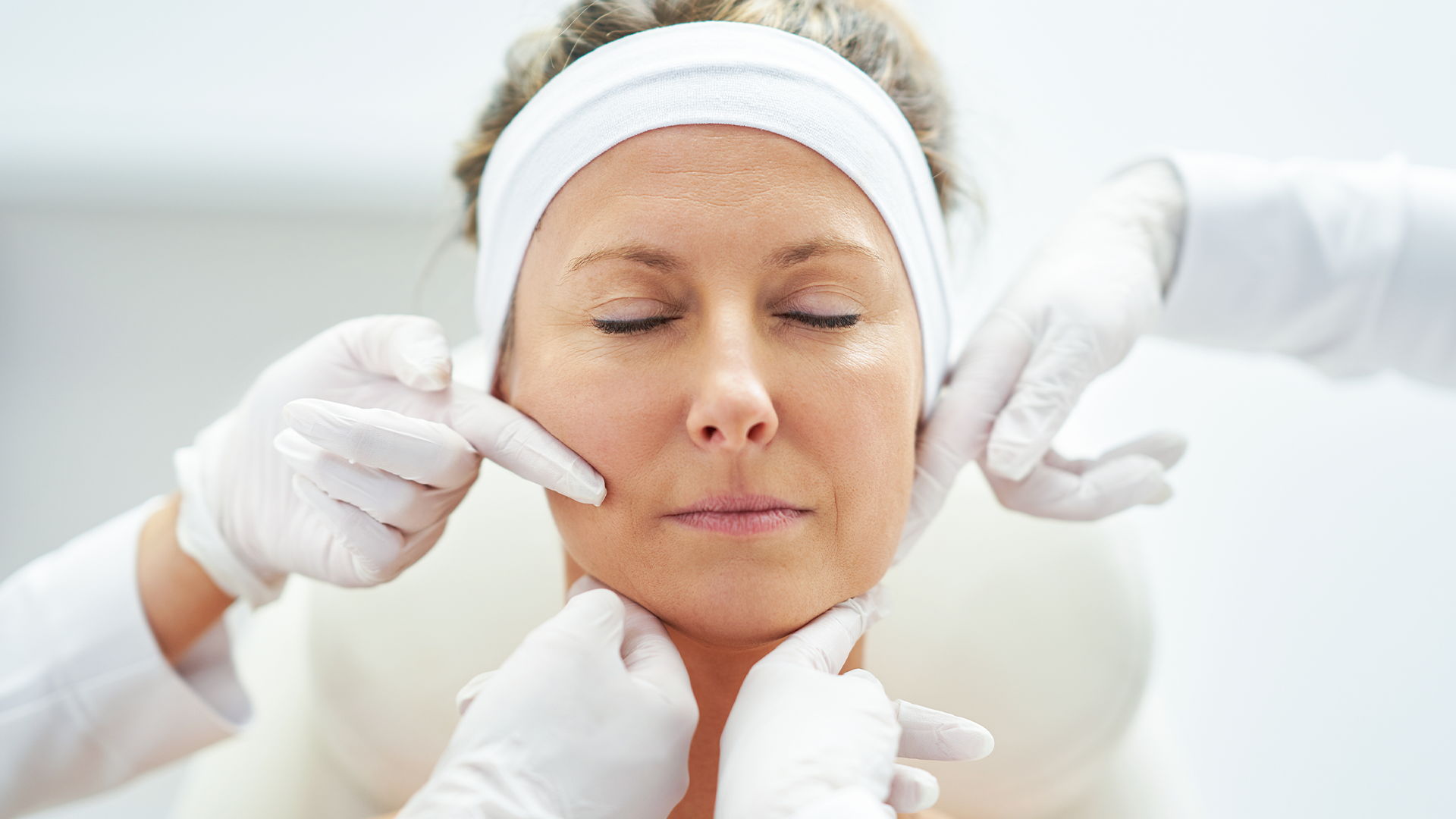
Facial contouring · SkinTight™ results guide
After SkinTight™ face tightening, the face you see in the mirror is not yet the face you will be assessing later. Heat-related tissue contraction, swelling, repair and collagen remodelling overlap, each on its own course. That is why early appearances can mislead, why further change may develop over several months, and why two people treated for a similar concern can follow quite different paths.
The essential idea
A SkinTight™ result is a process that is reviewed over time, not a single moment that can be photographed the next day. Swelling can disguise change in either direction, firmness can be part of healing rather than a sign of tightening, and remodelling continues after the visible recovery has settled. The degree and timing of improvement depend on the starting anatomy, the treatment map and individual healing, so a result should be judged against the target agreed at consultation, not against another person’s timeline.
Four processes that overlap after treatment
In our face tightening procedure, performed under local anaesthetic, a cannula-based device delivers radiofrequency energy to selected superficial tissue planes. Controlled heating may encourage tissue contraction, may reduce small deposits of superficial fat and may support collagen remodelling. Research describing three-dimensional radiofrequency tightening links measurable soft-tissue contraction to the depth, power, temperature and duration of energy delivery, which helps explain why the effect is not identical from one treatment map to another.
Once treatment ends, the body’s healing response begins. General wound-healing physiology describes overlapping phases of haemostasis, inflammation, proliferation and remodelling. These phases do not start and stop neatly, and that overlap is what makes the early weeks difficult to interpret.
Process 01
Heat-related contraction
Heated connective tissue may contract. Some patients notice an early contour change, but its visible extent is difficult to judge while the tissues are still reacting.
Process 02
Inflammation and swelling
Fluid and inflammatory change can temporarily fill, smooth or distort the treated zones, and may settle unevenly.
Process 03
Repair
New tissue is laid down. Areas can feel firm, tender or lumpy, and sensation may be reduced while nerves and tissues recover.
Process 04
Collagen remodelling
Collagen is gradually reorganised. Any change in firmness or texture from this stage develops slowly and is not visible day to day.
Because these processes run together, a single photograph taken early in recovery mixes several effects. It cannot separate genuine contraction from swelling, or temporary firmness from a lasting change in tissue quality.
Why the early appearance is an unreliable guide
Swelling does not affect every face in the same way. In one person it may make the jawline look smoother and apparently tighter for a short time; in another it may blur definition so that the area looks heavier than before treatment. As the swelling settles, the first person may feel that some improvement has been lost, while the second may notice a contour that was hidden at first. Neither experience on its own predicts the eventual outcome.
Recovery also includes effects that can be mistaken for the result itself. Treated areas may feel firm or slightly uneven, and sensation may be altered for a period. A firm area is a sign that tissue is healing, not proof that tightening is taking place. Conversely, a soft area is not evidence that treatment has failed.
The two sides of the face may also settle at different rates. Faces are naturally asymmetric, energy delivery has to respect local anatomy, and healing is rarely perfectly even. Temporary differences between sides are common during recovery; persistent or worsening asymmetry is something we want to assess rather than leave to guesswork.
An indicative sequence, not a schedule
Our face tightening page explains that some patients may notice early changes, that swelling can initially affect appearance, and that further change may develop over several months as tissues heal and collagen remodels. The sequence below describes that pattern in broad terms. It is deliberately not a calendar: individual healing determines the pace.
| Stage | What may be happening in the tissues | What may be noticed | A sensible reading |
|---|---|---|---|
| Immediately after treatment | Heat-related contraction, local anaesthetic and the start of inflammation. | A changed contour, numbness, tenderness and early swelling. | The face is not yet in a state that can be assessed. |
| Early recovery | Inflammation and the beginning of repair. | Swelling, bruising, redness, firmness and uneven settling between zones. | Day-to-day fluctuation is expected; follow the written aftercare plan. |
| Settling | Swelling reduces and repair continues beneath the surface. | The underlying contour becomes clearer; some firmness or altered sensation may remain. | A more useful comparison with the starting point becomes possible, but it is still provisional. |
| Following months | Collagen remodelling and gradual maturation of the treated tissue. | Further, usually subtle, change in firmness, texture or definition, or little additional change. | The result is reviewed against the agreed target before any further treatment is considered. |
General wound-healing literature describes a remodelling phase that may continue for up to about a year, with collagen gradually reorganised into a stronger structure. That description comes from wound physiology in general rather than from measurements of this specific procedure, so it explains why change can be slow; it does not set a date by which a SkinTight™ result is complete.
Why two patients rarely follow the same course
Two people may describe the same concern, such as a less defined jawline, yet start from different anatomy and receive different treatment maps. The visible outcome reflects all of these variables together, which is why we avoid predicting a fixed amount of change.
| Factor | How it may influence the result |
|---|---|
| Starting degree of laxity | Mild to moderate superficial laxity is the intended target. Where laxity is more marked, a visible change may still leave considerable excess skin. |
| Superficial fat volume | Where a small deposit softens definition, its reduction may contribute to contour change. In a leaner face there is little to reduce, and contour change depends more on tissue response. |
| Skin thickness and quality | Thicker, heavier or sun-affected skin may respond differently from thinner skin, and surface concerns such as pigment are separate targets. |
| Deeper structural change | Where descent of deeper tissues or skeletal change contributes most to the appearance, superficial treatment may produce less visible change. |
| Healing capacity and health | Wound-healing literature lists age, smoking, nutrition, circulation, illness and some medicines among factors that can impair healing. |
| Treatment map | The zones treated, the zones deliberately avoided and the energy delivered differ between plans, so outcomes cannot be compared like for like. |
| Previous procedures | Earlier surgery, threads, energy treatments or injectables may alter tissue planes and the way an area heals. |
| Other agreed treatments | Where an individual plan includes another treatment, that treatment has its own timeline, recovery and risks, and it can be harder to attribute change to one component. |
Why age alone does not predict the outcome
It is tempting to assume that younger skin always responds better. The evidence is more nuanced. In one multicentre retrospective study of 247 patients treated with a combination of bipolar subdermal and fractional radiofrequency, older patients showed a larger average improvement on a face and neck ageing scale, while younger patients also improved. Older patients often start with more change to improve, and this study used a specific device combination, so the finding does not show that any particular person will respond more or less.
How change is judged — and what studies actually measured
Published evidence on radiofrequency tightening is encouraging but uneven. A systematic review in Plastic and Reconstructive Surgery concluded that monopolar and bipolar devices can produce measurable improvement in facial and body laxity, with mostly minor and transient complications. A broader review of 121 studies on face and neck radiofrequency reported improvements in laxity and related outcomes, and noted that satisfaction was higher among people seeking modest rejuvenation.
A critical review of subsurface radiofrequency treatments reached more cautious conclusions. It found that most studies relied on patient satisfaction scores and clinician review of photographs, that satisfaction was modest, that photographs did not always depict results accurately and that conflicts of interest were common. Taken together, these reviews support a realistic message: improvement is possible, its size varies, and a study average says little about one individual face.
Reference point
The agreed target
We compare the outcome with the specific zones and aims discussed before consent, not with a general idea of looking younger.
Baseline
The starting record
Pre-treatment clinical records and photographs taken in comparable conditions give a fairer reference than memory.
Examination
Feel as well as look
Firmness, residual swelling, sensation and contour regularity are assessed in person, which a photograph cannot do.
Your view
What has changed for you
Your own observations matter, and we discuss them alongside the clinical findings rather than in place of them.
This is also why we treat before-and-after images with care. A single case shows one person’s anatomy, healing and treatment plan; it is not a forecast for anyone else.
Slow change or a problem that needs review?
A gradual result means that some effects of treatment can last longer than people expect. The critical review of subsurface radiofrequency reported that induration and nodules were among the most frequent complications, and that prolonged swelling and numbness were common. In the 247-patient study mentioned above, swelling lasting more than six weeks was recorded in 4.8% of patients, a hardened area beyond twelve weeks in 3.2% and temporary weakness of a lower-lip nerve branch in 1.2%; all resolved without further intervention in that cohort. Those figures come from one retrospective series and should not be read as the exact risk for any individual.
Potential complications of the procedure also include pain, bruising, bleeding, infection, burns, skin necrosis, contour irregularity, asymmetry, scarring, prolonged firmness, altered sensation and nerve injury. The table below is a guide to when a slow recovery deserves a conversation with us.
| Finding | May be part of recovery when it is | Contact us when it is |
|---|---|---|
| Firmness or small lumps | Mild, painless and gradually softening. | Painful, enlarging, red, hot or not improving over time. |
| Swelling | Steadily reducing, even if it fluctuates from day to day. | Rapidly increasing, one-sided and tense, or returning after it had settled. |
| Altered sensation | Patchy numbness or tingling that slowly improves. | Accompanied by new weakness, a change in smile or lip movement, or worsening. |
| Asymmetry | Mild and lessening as both sides settle. | Marked, sudden or becoming more pronounced. |
| Skin appearance | Fading bruising or redness. | Blistering, darkening, a wound, discharge or spreading redness. |
If anything about your recovery is unclear or worries you, contact us. We would rather look at a change early than leave you uncertain about whether it is part of normal healing, and getting in touch does not mean that something has gone wrong.
When further treatment is discussed
There is no fixed schedule for repeating face tightening. Whether anything further is appropriate depends on the response to the first treatment, individual anatomy, ageing and the goals agreed at consultation, and we consider it only after clinical review once the tissues have had time to settle. Deciding too early risks treating swelling or temporary firmness rather than the true result.
If the change is smaller than hoped
A modest change is not automatically a failed treatment. Patients seeking a measured improvement are the people for whom this type of treatment is intended. Still, if the outcome falls short of the agreed target, the review should identify why. The cause may be healing that is still in progress, a contribution from deeper structures, volume loss rather than laxity, or a gap between expectations and what this type of treatment can achieve.
More energy or more sessions do not guarantee a better result, and repeated treatment of the same area carries its own risks, including unwanted hollowing and contour irregularity. Where the remaining concern is structural, an honest discussion may include a surgical opinion, a different non-surgical approach or no further treatment.
How long a change may remain visible
The duration of results is not fixed. It varies with the treatment performed, individual anatomy, healing, ageing, lifestyle and other personal factors, so we cannot promise a specific period.
Treatment does not stop the face from continuing to age. Changes in weight, sun exposure, smoking and general health continue to influence skin and contour after the treated tissues have matured. Protecting your skin from the sun, avoiding smoking and keeping a stable weight support skin health in general; they cannot guarantee how long a particular result will last.
Frequently asked questions
Why did my face look tighter just after treatment than it does now?
Is firmness under the skin a sign that collagen is forming?
Does a stronger early reaction mean a better final result?
Someone I know saw a change sooner. Is my recovery slow?
Can numbness change how the result looks?
Is there a date when my result is final?
Does a subtle change mean the treatment did not work?
If more is needed, will the same procedure simply be repeated?
Realistic expectations
Understand how your own result may develop
At consultation we assess your facial anatomy, explain the change that may be realistic for you and discuss recovery, timing and risks, with no obligation to proceed.
Medical and regulatory sources consulted
- Dr Ducu Clinics: SkinTight™ Face Tightening procedure
- Three-dimensional radiofrequency tissue tightening: a proposed mechanism and applications for body contouring (Aesthetic Plastic Surgery, 2011)
- Minimally Invasive Approach to Skin Tightening of the Face and Body: Systematic Review of Monopolar and Bipolar Radiofrequency Devices (Plastic and Reconstructive Surgery, 2022)
- Evaluating the effectiveness and safety of radiofrequency for face and neck rejuvenation: a systematic review (Lasers in Surgery and Medicine, 2022)
- A Systematic Review of Subsurface Radiofrequency Treatments in Plastic Surgery (Annals of Plastic Surgery, 2022)
- Multimodal Radiofrequency Application for Lower Face and Neck Laxity (Plastic and Reconstructive Surgery Global Open, 2020)
- StatPearls: Physiology, Wound Healing (NCBI Bookshelf)
- NHS: Choosing who will do your cosmetic procedure
- Care Quality Commission: Choosing cosmetic surgery
- GMC: Guidance for doctors who offer cosmetic interventions
- ASA/CAP: Guidance on marketing cosmetic interventions