
 English
 Spanish
 Arabic
 Chinese
 French
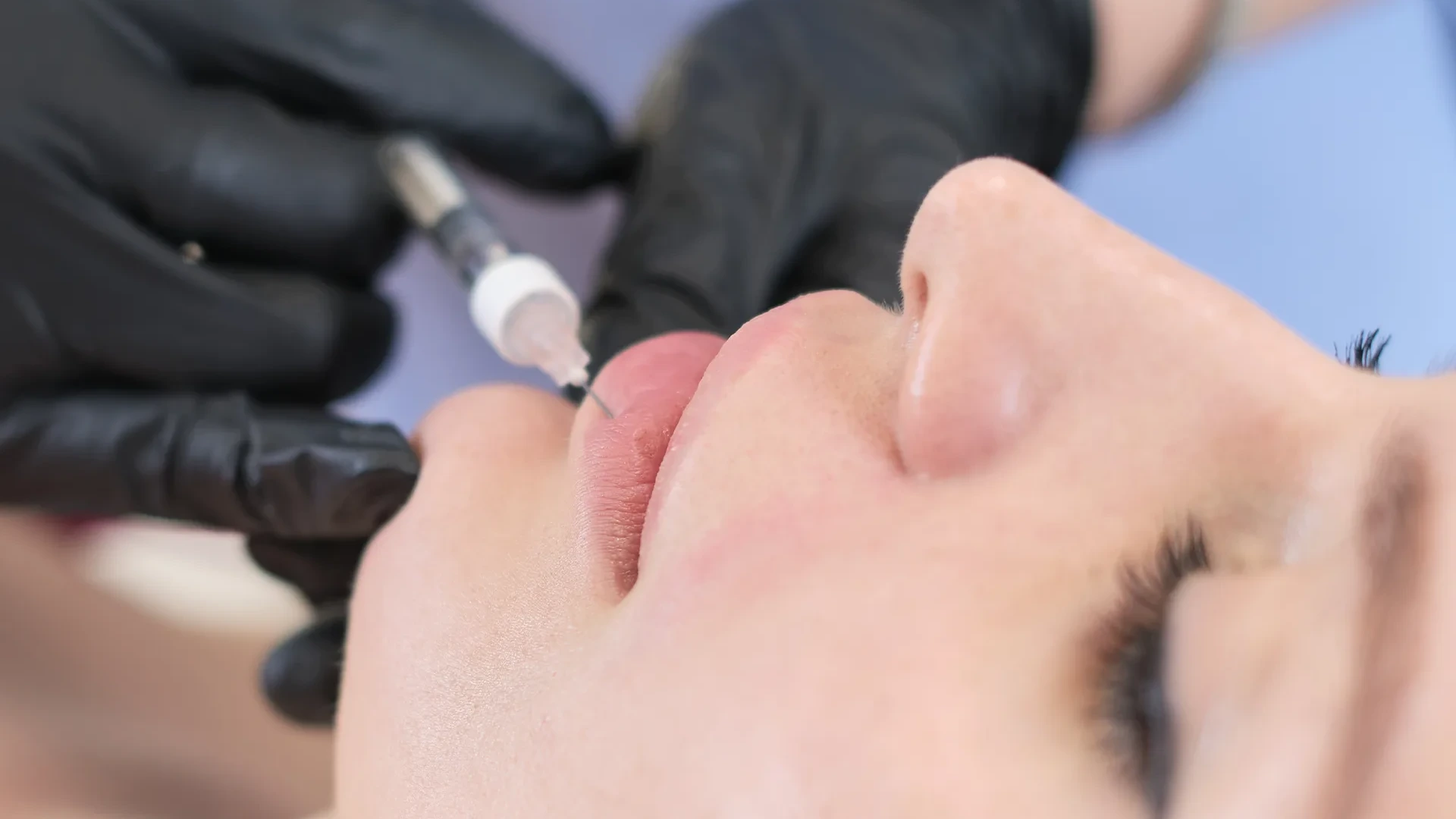
Most people who ask about lip filler are not asking to look like somebody else. They are usually asking for one of a few quieter changes: a little more fullness, a clearer border, better balance between the upper and lower lip, or a softer version of changes that have appeared with time. The challenge is that “natural” is not a product, a technique or a fixed number of millilitres. It is a relationship between the lips, the rest of the face and the amount of change the tissues can support.
That is why a good lip-filler consultation starts before any injection. The clinician needs to understand the existing anatomy, movement, symmetry, previous filler, dental and skeletal support, the quality of the lip tissue and what the patient is actually hoping to change. A plan that looks restrained on one face may look excessive on another.
This guide explains how natural-looking lip augmentation is approached, where definition differs from volume, why conservative treatment is often easier to control, what recovery really looks like, and the risks that should be discussed before treatment. It is written as patient information, not as a promise that any particular result can be guaranteed.
Natural-looking lip filler is not about making every lip fit the same template. It is about matching the treatment to the individual anatomy, using only as much change as the agreed objective requires and accepting that some requests cannot be reproduced safely or convincingly with filler alone.
Contents
What “natural-looking” really means
“Natural-looking” does not mean invisible, and it does not mean that every patient needs the smallest possible amount of filler. It means that the change still makes sense on the face in front of you. The lip should not look as though it has been designed independently of the nose, chin, teeth, smile and surrounding soft tissue.
Modern lip-augmentation literature increasingly emphasises whole-face assessment, individual proportions and conservative, staged planning. There is no single upper-to-lower-lip ratio or shape that can be treated as universally ideal across ages, ethnic backgrounds and facial types. The relevant question is whether the result remains proportionate to the individual patient.
Why lip filler can start to look obvious
Obvious filler is rarely explained by one factor alone. It can come from too much volume, repeated treatment before previous product has been properly assessed, placement that does not match the anatomical goal, or simply trying to force a lip into a shape that belongs to a different face.
The point is not that fuller lips are automatically “unnatural”. Some patients prefer more visible augmentation. The important distinction is that the treatment should reflect the agreed goal and the face, rather than following a one-size-fits-all recipe.
The lip is not one structure
The lip contains multiple anatomical zones and is highly mobile and vascular. The vermilion border, Cupid’s bow, central tubercles, oral commissures and body of the upper and lower lip do not contribute the same thing to appearance. Ageing also changes the perioral region: definition can soften, vertical height can change, the upper lip may lengthen and the relationship with the teeth and surrounding skin can shift.
That is why “I want 1 ml” is not a complete treatment plan. The clinician still needs to decide where — if anywhere — volume should be placed, whether definition is the priority, whether the tissues can accommodate the requested change and whether asymmetry comes from the lip itself or from deeper facial structure.
Definition, volume and projection are different goals
Patients often use the word “volume” to describe several different things. Someone may feel that the lips look smaller when the real change is loss of border definition. Another person may have good definition but want more body in the pink part of the lip. A third may be asking for forward projection, which has a very different visual effect.
| Goal | What is being assessed | What a conservative plan is trying to avoid |
|---|---|---|
| Definition | Vermilion border, Cupid’s bow, transition between skin and lip, age-related softening. | A sharply drawn or over-emphasised border that looks separate from the natural lip. |
| Volume | Body of the upper and/or lower vermilion, baseline fullness, tissue capacity and symmetry. | Adding more volume than the tissue can support or than the face needs. |
| Projection | How far the lips sit forward in profile relative to the nose, chin and dental support. | Pushing the lips forward simply because the patient asked for “more”, when the concern was actually definition or vertical show. |
| Balance | Relationship between upper and lower lip and between the lips and the rest of the face. | Applying a fixed ratio or template that does not suit the individual anatomy. |
In practice, a treatment may address more than one goal. The important part is knowing which change is being created by each decision rather than treating “lip filler” as one single manoeuvre.
Facial balance matters more than a reference photo
Reference photos can be useful because they show the kind of result a patient finds attractive. They are much less useful when they become a literal blueprint. Lip dimensions are influenced by ethnicity, age, sex, dental support, skeletal structure, surrounding soft tissue and individual preference, so no photograph can tell a clinician what will be proportionate on another face.
A whole-face assessment is therefore not an excuse to sell more treatment. It is the opposite: it helps the clinician understand whether the requested lip change belongs on the face at all. Sometimes the most natural plan is a small adjustment. Sometimes it is staged treatment. Sometimes the correct answer is that filler cannot reproduce the reference image without creating a result that looks forced.
What lip filler can — and cannot — realistically do
Hyaluronic-acid lip filler can temporarily add volume and can be used to refine aspects of lip shape and definition. The same principle is useful clinically: filler can modify soft-tissue appearance, but it does not replace every structure that influences the lips.
What it may help with
- Temporary enhancement of fullness in naturally fine lips or lips that have lost volume with time.
- Refinement of selected areas of definition, including the vermilion border or Cupid’s bow where clinically appropriate.
- Improvement in some mild asymmetries, although perfect symmetry should not be promised.
- Adjustment of the visual relationship between the upper and lower lip as part of an individual plan.
- Support of selected perioral features where the anatomy and product choice make filler appropriate.
What it cannot promise
- A precise copy of another person’s lip anatomy.
- Perfect symmetry or a guaranteed “natural” result.
- Permanent correction: hyaluronic-acid fillers are temporary and change over time.
- Correction of every concern caused by dental, skeletal, muscular or significant skin changes.
- Zero swelling, zero bruising or zero risk.
What a proper consultation should explore
The NHS recommends a consultation with the practitioner who will perform a cosmetic procedure and specifically advises asking about the product, practitioner training, expected recovery, risks, aftercare and what happens if something goes wrong. For lip filler, the consultation is also where a clinician decides whether treatment should proceed at all.
| Consultation factor | What should be explored | Why it matters |
|---|---|---|
| Goal and expectations | What the patient actually wants to change, what they dislike about previous results, and how visible they want the change to be. | A realistic plan is impossible if “natural” means something different to the patient and the clinician. |
| Previous filler | Known product, timing, location, previous dissolving, persistent lumps, migration, swelling or other complications. | Residual filler or altered tissue can change whether more filler should be added. |
| Medical history | Relevant conditions, allergies, medication, bleeding tendency, immune problems and previous reactions. | Some factors may require postponement, modification or further medical assessment. |
| Cold sores / HSV | History of outbreaks, recent symptoms and whether previous aesthetic treatment triggered a flare. | Lip procedures can reactivate HSV in some patients; active or prodromal symptoms are reasons to defer treatment and prophylaxis may be considered after individual assessment. |
| Local health | Active infection, inflammation, lesions, dental issues and relevant recent or planned dental treatment. | Treatment timing may need to change to reduce avoidable risk. |
| Anatomy and tissue quality | Baseline size, movement, border, symmetry, projection, surrounding support and the capacity of the tissue to accommodate change. | Determines whether the requested result is realistic and how conservative the plan should be. |
How a treatment plan is built
A treatment plan is best thought of as a sequence of decisions. The syringe is the final step, not the first one.
Is the request about volume, border definition, asymmetry, projection, age-related change or a combination?
Some concerns come from dental, skeletal, muscular or skin factors rather than missing soft-tissue volume.
Residual filler, HSV history, inflammation, medication or prior complications may change the timing or technique.
The amount and distribution should be based on the tissue and objective, not on a fixed recipe that is applied to every patient.
Only then can contour, symmetry and the need for any further treatment be judged more meaningfully.
A staged approach is not necessary for everyone, but it can be useful when the tissues are small, the requested change is significant, previous filler is present or the clinician wants to see how the lip settles before deciding whether more treatment is appropriate.
What happens on treatment day
The exact appointment varies with product, technique and patient needs. Topical numbing is usually applied before injection, and either a fine needle or a cannula may be used depending on the plan. Both needles and cannulas have roles in aesthetic practice; neither makes the procedure risk-free, and choice of instrument should follow the anatomy and intended placement rather than marketing claims.
The lips are dynamic and vascular, so the clinician will usually assess them at rest and in movement, clean the treatment area, mark or mentally map the relevant landmarks and inject in small, controlled amounts. The appearance immediately after injection is not the final result because swelling can temporarily exaggerate volume and asymmetry.
Recovery: what the first weeks can look like
Swelling, tenderness and bruising are common after lip augmentation, and the lips may look larger or less symmetrical during the early recovery period than they will once swelling settles. The exact course varies between patients, products and techniques.
The clinic usually suggests a review at around four weeks and estimates that lip filler lasts roughly six to nine months. These figures are useful as guidance, but they should not be treated as a guarantee for every patient because longevity and recovery vary.
Aftercare without overcomplicating it
Aftercare should be practical rather than theatrical. The aim is to avoid unnecessary irritation, reduce avoidable swelling and make sure the patient knows which symptoms are expected and which are not. Instructions can vary according to the product and technique, so the treating clinician’s advice takes priority.
Risks, complications and warning signs
Dermal filler is a medical procedure with real risks. Most reactions are local and short-lived — swelling, tenderness and bruising are common — but infection, nodules, inflammatory reactions, asymmetry and vascular complications can occur. UK NHS guidance specifically notes that dermal-filler complications can be serious, including infection, nerve damage and blindness.
| What you may notice | How to think about it | What action makes sense |
|---|---|---|
| Swelling, tenderness or bruising | Common early effects after lip injection. | Follow aftercare advice and monitor the trend. They should generally improve rather than progressively worsen. |
| Persistent lump, marked asymmetry or a result that does not settle as expected | May reflect swelling, product distribution, residual previous filler or another local issue. | Arrange clinical review rather than repeatedly manipulating the area at home. |
| Increasing heat, redness, discharge, fever or worsening tenderness | Can be compatible with infection or inflammation and should not be dismissed as ordinary swelling. | Contact the treating clinic promptly for assessment. |
| Severe or escalating pain, blanching, mottled/discoloured skin, delayed capillary refill or cool skin | Can be warning signs of impaired blood flow / vascular occlusion. | Requires urgent assessment and treatment; do not wait for a routine review. |
| Any visual disturbance, eye pain or neurological symptoms after filler | Rare but potentially serious filler complications can involve vision or neurological function. | Seek emergency medical assessment immediately. |
Vascular occlusion is uncommon, but it matters because delayed recognition can lead to tissue injury. The safety conversation should therefore include not only how complications are reduced, but also what the clinic will do if one occurs and how the patient can obtain urgent help.
Dissolving HA filler and previous treatment
One reason hyaluronic-acid fillers are often chosen is that hyaluronidase can be used to break down HA in selected situations. That does not mean dissolving is a simple reset button. The amount of filler present may be uncertain, different products respond differently, multiple sessions can be required, and the surrounding tissues may not immediately look exactly as they did before treatment.
Previous filler is therefore part of the consultation, not a side note. If the clinician cannot confidently understand what is present or why the lips look the way they do, adding more product may be less predictable than reassessing first.
Frequently asked questions
These are the questions patients most often ask when they are trying to understand whether lip filler can produce a subtle, proportionate result — and what trade-offs come with treatment.
How much lip filler do I need?
Is 0.5 ml always natural?
Is 1 ml too much for lips?
What is the difference between definition and volume?
Can filler correct asymmetry?
Can I copy a celebrity or reference photo?
Will my lips look too big straight after treatment?
How long does swelling last?
When can I judge the final result?
How long does lip filler last?
Can lip filler migrate?
Can lip filler be dissolved?
What if I get cold sores?
Can I exercise after lip filler?
Can I drink alcohol after treatment?
Can I wear lipstick immediately afterwards?
What is vascular occlusion?
When should I seek urgent help after filler?
Related treatment: Lip fillers