
 English
 Spanish
 Arabic
 Chinese
 French
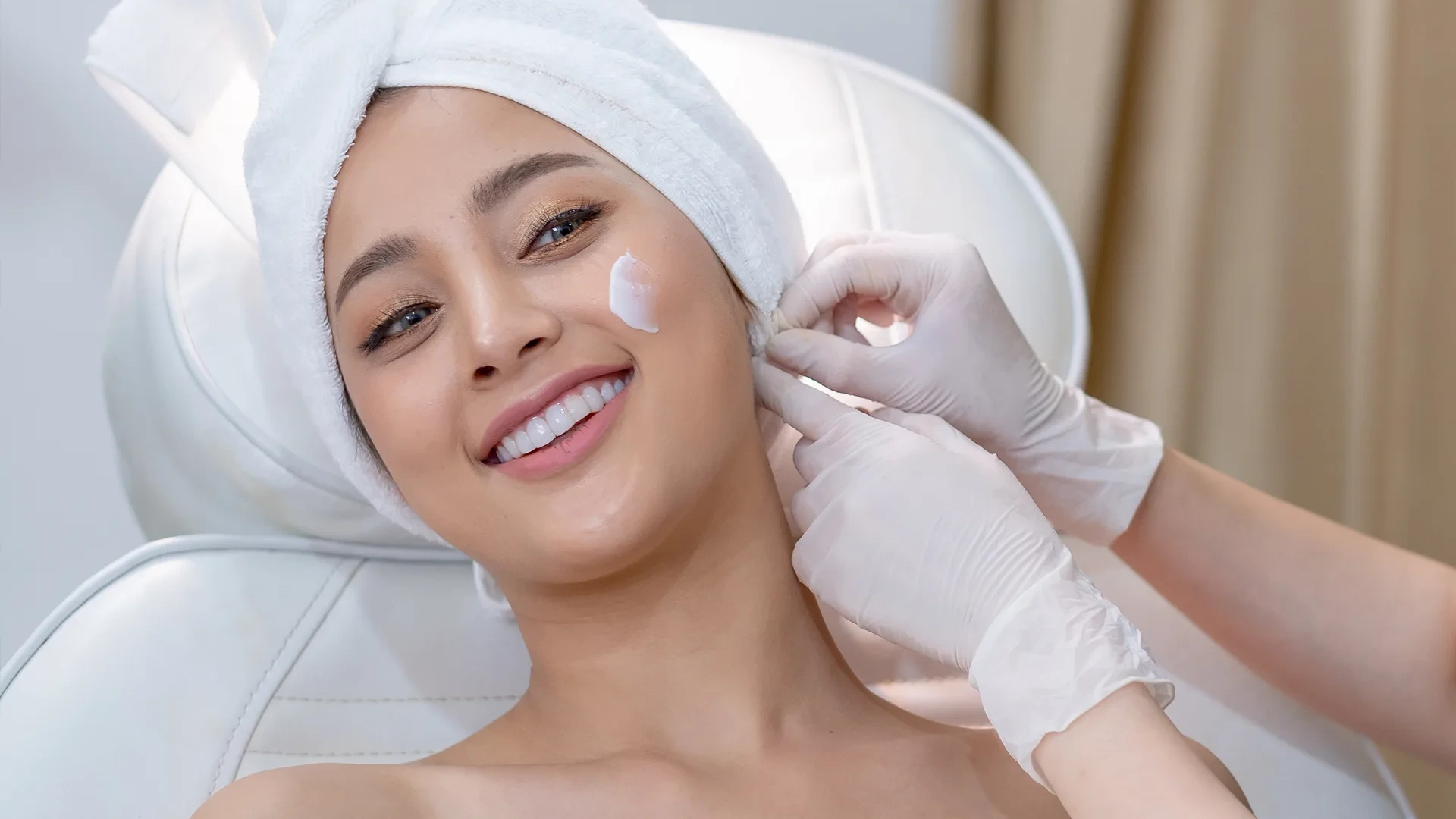
The most useful pre-wedding skin plan is rarely the one with the greatest number of treatments. A wedding is a fixed-date event, which changes the clinical logic: every procedure has to be considered not only for what it may improve, but also for how predictably the skin will recover before the photographs, make-up and long day itself.
For some people, the priority is hydration and a calmer skin barrier. For others, it may be acne control, pigmentation, redness, texture, scarring, volume loss or a specific contour concern. Those are different problems, and they should not all be treated with the same “bridal glow” package.
The safest strategy is to work backwards from the event date, introduce higher-variability procedures earlier, leave enough time to assess the response, and make the final days intentionally boring. A stable routine and familiar skin are often more valuable immediately before a wedding than one last aggressive intervention.
Pre-wedding skin planning is a timing and suitability problem, not a race to fit in more procedures. Start early enough to understand how the skin responds, use treatment only for a clearly defined concern, and reserve the final days for predictable, low-disruption care rather than experimentation.
Contents
01
A wedding date changes how skin treatment should be planned
02
Start with the concern — not with a list of procedures
03
Three to six months before: build the plan, not the panic
04
Six to twelve weeks before: allow time for procedures to declare themselves
05
Three to six weeks before: refine rather than redesign
06
The final two weeks: predictability matters more than intensity
07
Facials and barrier-focused care close to the event
08
Microneedling and PRP: useful options that still need recovery time
09
Peels, laser and energy-based treatments: why timing matters
10
Dermal fillers: contour treatment, not a skin-health shortcut
11
Prescription-only injectable options require a separate medical pathway
12
Skin boosters: what the evidence supports — and what it does not
13
Home skincare before the wedding: consistency beats novelty
14
Do not forget the neck, chest and hands
15
Frequently asked questions
A wedding date changes how skin treatment should be planned
A wedding is different from an open-ended cosmetic plan because there is no option to “see how it looks next month” once the date is close. Swelling, bruising, post-procedure redness, peeling, acne flares or post-inflammatory pigmentation may be temporary, but temporary still matters if the event is in three days.
That is why treatment timing should be built around recovery variability. Procedures that can create inflammation or require a course of sessions belong earlier in the plan. Treatments that are already familiar and reliably gentle can sit closer to the event. New products and unfamiliar procedures belong furthest away from the wedding date.
The often-quoted “three to six months” starting point is best understood as a planning window, not a medical rule. It gives enough time to establish a routine, treat active skin concerns, complete staged procedures if appropriate and change direction if the skin does not respond as expected.
| Planning window | Main objective | Practical principle |
|---|---|---|
| 3–6 months before | Assess skin, stabilise active concerns and decide whether a course of treatment is appropriate. | Introduce higher-variability treatments early enough to observe the response. |
| 6–12 weeks before | Continue staged treatments where clinically appropriate and reassess progress. | Do not keep adding procedures simply because the wedding is getting closer. |
| 3–6 weeks before | Refine rather than radically change the plan. | Allow time for injectable swelling, bruising or procedural redness to settle. |
| Final 2 weeks | Protect predictability. | Avoid first-time aggressive procedures or major changes to skincare. |
| Final days | Keep the skin calm and familiar. | Use only well-tolerated skincare and low-disruption care already known to suit the skin. |
Start with the concern — not with a list of procedures
The phrase “best treatment before a wedding” sounds as though there should be one winner. There is not. A person with active acne, a person with melasma and a person with dehydration may all describe their goal as “better skin”, but the treatment logic is completely different.
The first consultation should therefore translate broad words such as glow, smoothness or freshness into a specific, observable concern. Is the issue surface dryness? inflammatory acne? uneven pigment? redness? rough texture? acne scarring? laxity? volume loss? The answer determines what is useful and what is unnecessary.
This also prevents treatment stacking. Combining several procedures can be appropriate in selected patients, but more intervention is not automatically better, and overlapping recovery windows can make it harder to identify what caused irritation or inflammation.
Three to six months before: build the plan, not the panic
Several months out is the best time to solve the unglamorous problems: inconsistent sunscreen use, over-exfoliation, active acne, poorly tolerated retinoids, uncontrolled pigmentation or a routine containing too many competing actives.
It is also the point at which a clinician can decide whether a treatment course makes sense. Microneedling studies, for example, commonly use multiple sessions rather than a single last-minute treatment, and the published schedules vary. Injectable skin-quality treatments are also often studied as a series rather than one isolated session.
Starting early therefore creates options without creating pressure. If the skin becomes irritated, the plan can be simplified. If a procedure causes more redness than expected, there is time to recover. If the response is already good, there is no need to add another treatment just because one was originally pencilled in.
Six to twelve weeks before: allow time for procedures to declare themselves
This middle window is where procedure-led treatment may sit most comfortably for many patients, because there is still time for short-term erythema, oedema or peeling to resolve and for the clinician to judge whether another session is actually useful.
A 2025 systematic review of microneedling for facial rejuvenation found that most included studies used multiple sessions and that treatment schedules varied considerably. Reported adverse effects were usually transient, with erythema the most common. Earlier safety reviews also describe temporary redness, oedema, irritation and occasional post-inflammatory pigment change.
The same principle applies to peels and energy-based treatments. A recent systematic review comparing lasers and chemical peels found both could improve skin concerns, but short-term redness and procedural discomfort differed between modalities, and post-inflammatory hyperpigmentation remains a relevant consideration. The right buffer therefore depends on the exact procedure, skin type and prior response.
Three to six weeks before: refine rather than redesign
As the wedding approaches, the plan should become narrower. This is the point to assess what has already worked and whether anything genuinely needs refinement.
If dermal filler is being considered for a contour concern, allowing several weeks before the event is a conservative planning choice because swelling, bruising, tenderness, firmness or contour irregularity can occur after facial HA injections. The exact interval cannot be guaranteed from a generic article; treatment area, product, volume, technique and the patient’s previous response all matter.
Likewise, injectable skin-quality treatments can cause short-term injection-site reactions. Published evidence for intradermal hyaluronic-acid treatments is promising for hydration and radiance, but outcomes vary and the literature is heterogeneous. They should be discussed as one option within a plan, not as a mandatory “bridal” treatment.
The final two weeks: predictability matters more than intensity
The final fortnight is usually the wrong time for a first experience with an aggressive peel, an unfamiliar laser setting, a new injectable procedure or a complete skincare overhaul. This is one of the most useful practical principles in pre-wedding planning.
The reason is not that every procedure requires two weeks of recovery. Some do not. The reason is uncertainty: even normally mild treatments can produce unexpected redness, swelling, bruising, dryness, breakout or pigment change in an individual patient.
For the same reason, do not start several new active products at once. If irritation develops, there may be no time to identify which product caused it or to rebuild the skin barrier before the event.
Close to a fixed event, predictability is a clinical advantage. Familiar skincare and treatments that the skin has already tolerated are safer planning choices than a “stronger” treatment introduced for the first time.
Facials and barrier-focused care close to the event
A facial close to the wedding can be reasonable when the protocol is gentle, familiar and matched to the skin. The goal should be comfort, hydration or surface cleansing — not an aggressive attempt to transform texture in one appointment.
This distinction matters because the word facial covers very different procedures. A low-irritation hydrating treatment is not equivalent to a strong peel, intensive extraction session or device treatment. The recovery profile depends on what is actually being done.
If the skin is reactive, acne-prone or affected by eczema, rosacea or dermatitis, a clinician should decide whether treatment is appropriate at all. Calm skin generally photographs more predictably than recently inflamed skin.
Microneedling and PRP: useful options that still need recovery time
Microneedling is commonly discussed for texture, photoageing and acne scarring. A 2025 systematic review of 21 studies found high patient satisfaction overall, but also highlighted wide variation in protocols and outcome measures. Transient erythema was the most commonly reported adverse effect.
PRP is sometimes combined with microneedling or used by injection as part of a skin-quality plan. It should not be framed as an instant glow switch. The biological response is gradual, protocols vary and redness, swelling, tenderness or bruising can occur.
Both treatments therefore make more sense when there is enough time for the immediate reaction to settle and for any benefit to develop, rather than as a first-time procedure in the final days before a wedding.
Peels, laser and energy-based treatments: why timing matters
Chemical peels, laser and light-based treatments can address different combinations of pigmentation, redness, photoageing and texture. They are not interchangeable, and the risk-benefit calculation changes with skin type, diagnosis, device or peel depth, treatment settings and recent sun exposure.
A 2025 systematic review comparing lasers with chemical peels found both could improve several skin concerns, while short-term erythema and procedural pain were more common with lasers in the pooled comparisons. Post-inflammatory hyperpigmentation was reported with both modalities. A separate 2026 review of facial laser complications reinforces that pigment change, scarring and ocular injury remain recognised risks.
This is why a wedding deadline should never be used to rush an energy-based procedure. The correct timing is determined by the exact technology, depth, skin type and previous response — not by a generic “one week before” rule.
| Treatment category | What it may target | Planning consideration before a fixed event |
|---|---|---|
| Gentle facial / barrier care | Hydration, comfort, surface cleansing. | Can sit closer to the event if the protocol is familiar and low-irritation. |
| Microneedling / PRP | Texture, selected scars, skin-quality goals. | Allow time for redness, swelling or bruising and for gradual change. |
| Chemical peel | Surface texture or pigment depending on peel type. | Depth matters; peeling, irritation and pigment change must be considered. |
| Laser / light treatment | Pigment, redness, photoageing or texture depending on device. | Recovery and pigment risk vary substantially by technology and skin type. |
| Dermal filler | Volume or contour. | Allow time for swelling/bruising and a settled review; it is not a skin-health treatment. |
| Injectable skin-quality treatment | Hydration or other skin-quality endpoints depending on product. | Evidence and recovery vary by formulation; avoid treating it as compulsory pre-event care. |
Dermal fillers: contour treatment, not a skin-health shortcut
Dermal filler belongs in a different category from facials, peels or microneedling. Its primary role is to add volume or alter contour. It may be considered when the actual goal is lip volume, cheek contour, profile balance or another structural concern — not simply because a wedding is approaching.
Most HA filler adverse effects in controlled studies are short-lived injection-site reactions, including swelling, bruising, tenderness and firmness. Rare serious complications are also documented. That is why filler should not be trivialised as an easy pre-event add-on.
If filler is already part of the plan, earlier treatment gives time for swelling to settle and for the outcome to be reviewed without the pressure of an imminent event. A top-up should never be assumed to be necessary simply because a date is approaching.
Prescription-only injectable options require a separate medical pathway
Some injectable aesthetic options are prescription-only medicines in the UK. They sit under a different advertising and prescribing framework from dermal fillers, facials or skincare.
Skin boosters: what the evidence supports — and what it does not
The term skin booster is used for several injectable products and protocols, so it should not be treated as one standardised treatment. Evidence is strongest when the exact formulation and endpoint are specified.
A 2025 systematic review and meta-analysis of local hyaluronic-acid injections found improvement in skin hydration and radiance, while pooled effects for elasticity and melanin index were not significant. Earlier systematic review evidence described promising changes in several skin-quality measures but also called for larger randomised trials.
For a wedding plan, that means two things. First, claims should remain product- and evidence-specific. Second, the treatment still involves injections, so bruising, swelling and other injection-site reactions must be allowed for. “Hydration from within” is a marketing phrase, not a guarantee of how the skin will look on a fixed date.
Home skincare before the wedding: consistency beats novelty
Home care is the least dramatic part of the plan and often the most useful. A consistent cleanser, moisturiser and sunscreen routine gives the skin fewer variables to react to. Any treatment for acne, pigmentation or dermatitis should be followed as advised by the clinician managing that condition.
The weeks before a wedding are not the ideal time to copy a complicated social-media routine. Introducing several acids, retinoids, exfoliating pads and masks at once increases the chance of irritation without making it possible to identify which product caused the problem.
Sun protection also matters because ultraviolet exposure can worsen pigmentation and can complicate the timing of some peels or light-based procedures. If a treatment plan includes an energy-based device, recent sun exposure and tanning should be discussed before treatment.
Do not forget the neck, chest and hands
Wedding photographs often include the neck, décolletage and hands as much as the face. If those areas are a concern, they should be assessed early rather than added as a last-minute afterthought.
The treatment logic is the same: define the actual issue first. Dryness may need barrier care. Pigmentation may need diagnosis and sun protection. Texture or photoageing may lead to discussion of procedural options. Volume loss in the hands is a different problem again.
The goal is visual continuity, not identical treatment everywhere. Facial skin, neck skin and the backs of the hands differ in thickness, exposure and recovery, so one protocol should not be copied mechanically from one area to another.
Frequently asked questions
The questions below focus on what is most useful when planning skin treatment around a fixed event rather than around an open-ended aesthetic timetable.
When should I start preparing my skin for a wedding?
What is the best facial before a wedding?
Should I try a new treatment two weeks before the wedding?
Can microneedling be done before a wedding?
Can a chemical peel be done before a wedding?
What about laser or light treatment before the wedding?
Should I have dermal filler before a wedding?
How long before the wedding should dermal filler be done?
Do skin boosters improve glow?
Are prescription-only anti-wrinkle injections part of a bridal skin plan?
What should I do if I have active acne before the wedding?
What if I have melasma or pigmentation?
Should I change my skincare routine just before the wedding?
Is it safe to combine several treatments before a wedding?
What should I do if I develop redness or swelling after a treatment close to the wedding?
What is the most important rule in the final week?
The best pre-wedding treatment plan is the one that reaches the event with the skin stable, familiar and well understood. Start early enough to make measured decisions, treat real concerns rather than vague “glow” promises, and reduce intervention as the date approaches.
Related treatment: Skin rejuvenation & biostimulators