
 English
 Spanish
 Arabic
 Chinese
 French
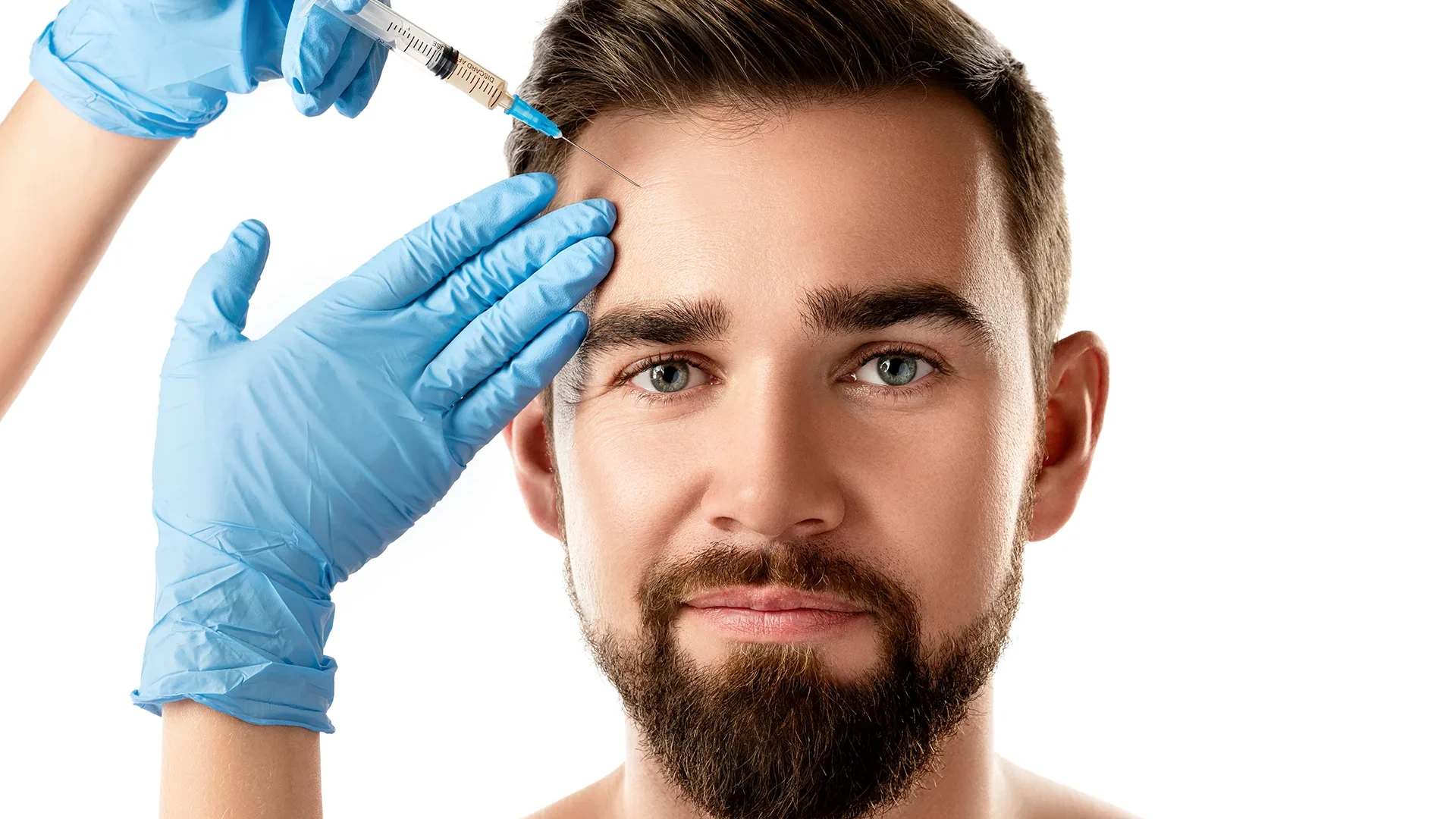
Men often ask for an anti-ageing treatment that looks subtle, does not change the character of the face and fits around work or social commitments. The difficulty is that “ageing” is not one problem. Dynamic lines, skin texture, under-eye hollowing, loss of structural definition and hair loss arise from different tissues and therefore need different treatment logic.
A useful plan starts by identifying which layer has changed. Skin quality may respond to skincare or energy-based treatment. A hollow tear trough is a volume problem in selected patients. Reduced jawline or chin definition can involve soft-tissue and skeletal proportions. Hair loss requires a completely separate diagnostic pathway.
That is why a responsible article should not rank procedures as if one treatment is universally first, second or third. The right option depends on anatomy, the actual concern, medical history, tolerance for downtime, and whether the desired change can be achieved without overtreatment.
Male facial ageing is multi-layered. No single procedure treats skin quality, dynamic lines, volume loss, structural definition and hair loss at the same time. Treatment should follow the concern and the anatomy — not a generic “top five” list.
Contents
There is no universal “top five” for male ageing
The phrase “top anti-ageing treatments” is attractive for search, but clinically it can imply a ranking that does not exist. A treatment that is useful for dynamic forehead movement does not solve a tear trough. A filler that restores selected volume does not improve every form of dark circle. A hair transplant does not rejuvenate facial skin.
The more accurate approach is to think in treatment categories. Current male-aesthetic literature emphasises that anatomy, skin biology and treatment strategy differ between men and women, and that planning should preserve the features the patient wants to keep rather than simply chase a younger-looking template.
Five broad categories often enter the conversation: preventive skin care and photoprotection, prescription-only treatment for dynamic lines, radiofrequency microneedling, hyaluronic-acid filler for selected volume or contour concerns, and hair restoration. Each needs its own suitability and risk assessment.
How male facial ageing differs
Male facial ageing is influenced by the same major processes seen in everyone — UV exposure, changes in collagen and elastin, facial movement, fat-compartment change, ligament laxity and skeletal remodelling — but the baseline anatomy is not identical.
Reviews describe thicker male skin, greater average facial size, different soft-tissue distribution, stronger facial musculature in some regions and a more angular lower face on average. Men also show distinct patterns of periocular ageing and are more likely to experience androgenetic hair loss.
These are population-level tendencies, not rules for every individual. The practical point is that treatment should be planned around the actual face rather than around a gender stereotype.
The foundation: photoprotection and skin maintenance
Before any procedure, the highest-value anti-ageing strategy is often less glamorous: reduce avoidable UV exposure, use appropriate sun protection and maintain a tolerable skincare routine. Photoageing is a major extrinsic contributor to wrinkles, pigment irregularity and loss of skin quality.
Daily broad-spectrum sunscreen, smoking avoidance and a consistent routine built around the individual’s skin condition can support long-term skin health. Prescription or active skincare may be appropriate for some patients, but it should be selected according to tolerance, diagnosis and medical history.
A device treatment can improve selected features, but it does not replace ongoing protection from UV exposure. Equally, a complex skincare routine is not a substitute for addressing deeper volume loss or hair loss when those are the actual concerns.
Prescription-only treatment for dynamic lines: a compliance-first explanation
Dynamic forehead lines, glabellar lines and crow’s-feet are often discussed in male aesthetics. In the UK, some injectable treatments used for these concerns involve prescription-only medicines.
Prescription-only medicines cannot be advertised to the general public.
The clinically appropriate pathway is consultation-led. A prescriber can assess the pattern of movement, muscle strength, medical history, previous treatment and the patient’s preference for preserving expression before discussing whether a prescription treatment is appropriate.
This is especially relevant in men because muscle bulk and aesthetic goals can differ, and dose or injection strategy should not be copied mechanically from another patient.
Prescription-only medicines must not be promoted to the public. A public article can explain the clinical concept of treating dynamic lines, but medicine selection belongs to an appropriate prescriber after individual assessment.
Radiofrequency microneedling: where Morpheus8 may fit
Morpheus8 combines microneedling with radiofrequency energy. Because needles enter the skin, it is better described as minimally invasive rather than non-invasive.
The current Dr Ducu Clinics service page lists the face and body as treatment areas and positions Morpheus8 around skin tightening and rejuvenation. A 2026 systematic review of radiofrequency microneedling for facial rejuvenation included 20 studies and reported consistent improvement in measures of skin texture and tightening, with erythema and oedema among the common transient adverse effects.
That evidence does not mean every patient with jowling or neck laxity will achieve the same result, and it should not be described as a surgical substitute. The degree of laxity, skin thickness, treatment settings and number of sessions all affect suitability and outcome.
Recovery can include redness, swelling, pinpoint crusting, tenderness and temporary pigment change. More serious complications are less common but remain possible, particularly when energy is delivered too aggressively or in unsuitable skin.
Under-eye filler: hollows are not the same as dark circles
Tear-trough filler is designed to add volume in selected cases of under-eye hollowing. It can soften shadowing caused by a depression between the lower eyelid and cheek, but it does not treat every cause of a dark under-eye appearance.
Pigmentation, visible vessels, skin laxity, oedema and true lower-eyelid bags can all create darkness or a tired appearance. Adding filler to the wrong anatomy can worsen puffiness or create persistent oedema.
A 2024 systematic review and meta-analysis of 31 reports involving 2,556 participants found high overall satisfaction but also documented swelling, bruising, redness, contour irregularity and blue discolouration. Rare vascular complications, including visual loss, are part of filler consent even though they are uncommon.
The current clinic page advises assessing the result after the area has settled, around two to three weeks post-procedure. That is more useful than judging the result immediately, when swelling can distort contour.
Structural filler and facial masculinisation
Hyaluronic-acid filler can also be used to add or restore volume in areas such as the chin, jawline and cheeks. In male aesthetics, the aim may be to support selected structural features rather than simply add volume everywhere.
The current Dr Ducu Clinics facial-masculinisation page describes treatment as individualised hyaluronic-acid filler placement in selected areas such as the jawline, chin and cheeks after assessment of facial anatomy.
This is not automatically an “anti-ageing” treatment. In some men, reduced lower-face definition reflects age-related soft-tissue change; in others, the request is about facial proportions that have always been present. The indication should therefore be defined clearly.
Filler carries expected short-term effects such as swelling, tenderness and bruising, as well as less common risks including nodules, infection, vascular occlusion and tissue injury. Technique and anatomical knowledge reduce avoidable risk but do not make injections risk-free.
FUE hair transplant: hair restoration is a separate ageing concern
Hair loss is often grouped into male anti-ageing content because it can change perceived age, but it is biologically separate from facial ageing. Androgenetic alopecia is common in men and may progress even while transplanted hair remains stable.
FUE hair transplantation involves extracting individual follicular units from a donor area, usually the back or sides of the scalp, and implanting them into areas of thinning or recession. The current clinic page lists a procedure time of approximately six to eight hours and notes that some cases may span one or two days.
FUE avoids the linear donor scar associated with strip harvesting, but it is not scar-free. Small dot-like donor scars can remain, and the long-term cosmetic result depends on donor density, graft survival, hair characteristics, pattern progression and hairline design.
Transplanted follicles that establish can provide long-term growth, but claims of guaranteed lifelong permanence are too absolute. Native, non-transplanted hair may continue to thin, so future planning can still be required.
Which concern points towards which treatment category?
| Primary concern | Treatment category that may be discussed | Important limitation |
|---|---|---|
| Dynamic expression lines | Prescription-only consultation pathway | A POM cannot be advertised to the public; suitability and treatment choice require prescribing assessment. |
| Texture, fine lines or mild skin laxity | Radiofrequency microneedling / skin-focused treatment | Improvement is gradual and does not reproduce surgical lifting. |
| Under-eye hollowing | Selected tear-trough filler cases | Not appropriate for every dark circle, eye bag or oedema pattern. |
| Reduced chin / jawline / cheek definition | Structural hyaluronic-acid filler in selected cases | Volume must be balanced with anatomy; overfilling can distort proportions. |
| Male-pattern hair thinning with adequate donor supply | FUE hair transplantation | Surgery does not stop future progression of untreated native hair loss. |
This table is deliberately not a ranking. The concern determines the category. A patient may also have more than one issue, but that does not mean every issue should be treated at once.
What “natural-looking” means in male aesthetics
“Natural-looking” is often used as marketing language, but clinically it should describe restraint and proportion rather than a guaranteed style of result.
In men, preserving a recognisable brow position, avoiding unnecessary mid-face volume, respecting jaw and chin proportions and maintaining facial movement may be important depending on the individual’s goals. Some men prefer stronger contour; others want changes that are difficult for other people to detect.
The safest interpretation is therefore patient-specific: preserve what the patient wants to keep, treat only the features that are actually contributing to the concern, and avoid chasing symmetry or youthfulness beyond what the anatomy can support.
Risks and limitations that should not be minimised
| Procedure category | Common / expected issues | Less common or serious risks |
|---|---|---|
| Radiofrequency microneedling | Redness, swelling, tenderness, pinpoint crusting. | Burn, infection, pigment alteration, scarring or prolonged inflammation can occur. |
| Tear-trough filler | Swelling, bruising, tenderness, temporary contour irregularity. | Persistent oedema, nodules, vascular occlusion and rare visual complications. |
| Structural facial filler | Swelling, bruising, tenderness, temporary asymmetry. | Infection, nodules, vascular compromise, tissue injury and rare visual events depending on site. |
| FUE hair transplant | Swelling, crusting, tenderness, temporary shedding. | Infection, scarring, folliculitis, poor graft growth, unnatural direction or donor depletion. |
| Prescription-only dynamic-line treatment | Procedure-specific effects vary. | Risks depend on the prescribed medicine, dose, anatomy and injection site and must be discussed by the prescriber. |
Downtime, settling and when results can be judged
“Minimal downtime” should not be used as a blanket promise. Social downtime and medical recovery are not the same thing.
After radiofrequency microneedling, visible redness or swelling can affect plans even if normal activity resumes quickly. After filler, swelling or bruising may be noticeable for days, and under-eye treatment should be judged only after the area has settled. After FUE, the donor and recipient areas can remain visibly crusted or red during the early healing phase.
Results also appear on different timelines. Filler changes can be immediate but distorted by swelling. Radiofrequency microneedling relies on gradual remodelling. Hair transplantation develops over months rather than days.
Treatment should therefore be scheduled around the biology of the procedure, not around a marketing promise of instant recovery.
Combining treatments: more is not automatically better
Combination treatment can make sense when several different ageing mechanisms are present. For example, skin texture, tear-trough hollowing and hair loss are separate concerns and may each require a different plan.
But combining procedures should not become a default package. Every additional treatment adds cost, recovery and risk. The rationale for each step should be clear, and staged treatment can sometimes make assessment easier.
A treatment plan is strongest when each procedure has one defined job rather than when several procedures are stacked simply because they are available.
What a careful consultation should assess
A careful consultation should identify the main concern, review medical history and previous aesthetic procedures, examine skin quality and facial structure, and discuss how much change the patient actually wants.
For filler, previous product history and the presence of swelling, nodules or unknown material can affect planning. For radiofrequency microneedling, skin type, active inflammation, scarring tendency and previous energy-based treatment matter. For FUE, donor density, hair-loss pattern and long-term progression need assessment.
Where a prescription-only option is being considered, assessment by an appropriate prescriber is required. Where hair-transplant surgery is being considered, the procedure belongs to a surgical pathway with its own consent, regulation and aftercare requirements.
The consultation should also be able to end with “no treatment” or “not yet”. Suitability is not a sales outcome.
Frequently asked questions
What is the best anti-ageing treatment for men?
Do men need different aesthetic treatments from women?
Can one treatment fix wrinkles and sagging at the same time?
Is Morpheus8 non-invasive?
Can Morpheus8 replace a facelift?
Does tear-trough filler remove dark circles?
How long should I wait to judge under-eye filler?
Can facial filler make a man look more masculine?
Is facial masculinisation the same as anti-ageing?
Is FUE hair transplant permanent?
Does FUE leave scars?
How long does an FUE hair transplant take?
Can I have several anti-ageing treatments at once?
What does “minimal downtime” really mean?
Why is prescription treatment for wrinkles not promoted in this guide?
When should I choose skincare rather than a procedure?
A more useful way to think about anti-ageing for men
A better anti-ageing plan for men begins with a diagnosis of the concern rather than a shopping list of procedures. Skin quality, dynamic movement, volume loss, structural definition and hair loss each belong to a different part of the ageing process.
The most proportionate plan may be one procedure, a staged combination, or no procedure at all. Preserving identity, avoiding unnecessary volume and allowing adequate recovery are more meaningful goals than trying to look a fixed number of years younger.
The result should be judged by whether the chosen treatment addresses the right tissue with an acceptable balance of benefit, limitation, recovery and risk.
Related treatment: Male aesthetics